
If you have ever been halfway up a ladder trying to line up permanent outdoor lights under a roof edge, you already know the real problem is not the lights. It is the mount. The best fascia lighting mount options keep every light aligned, hold up through weather, and make the finished install look intentional instead of patched together.
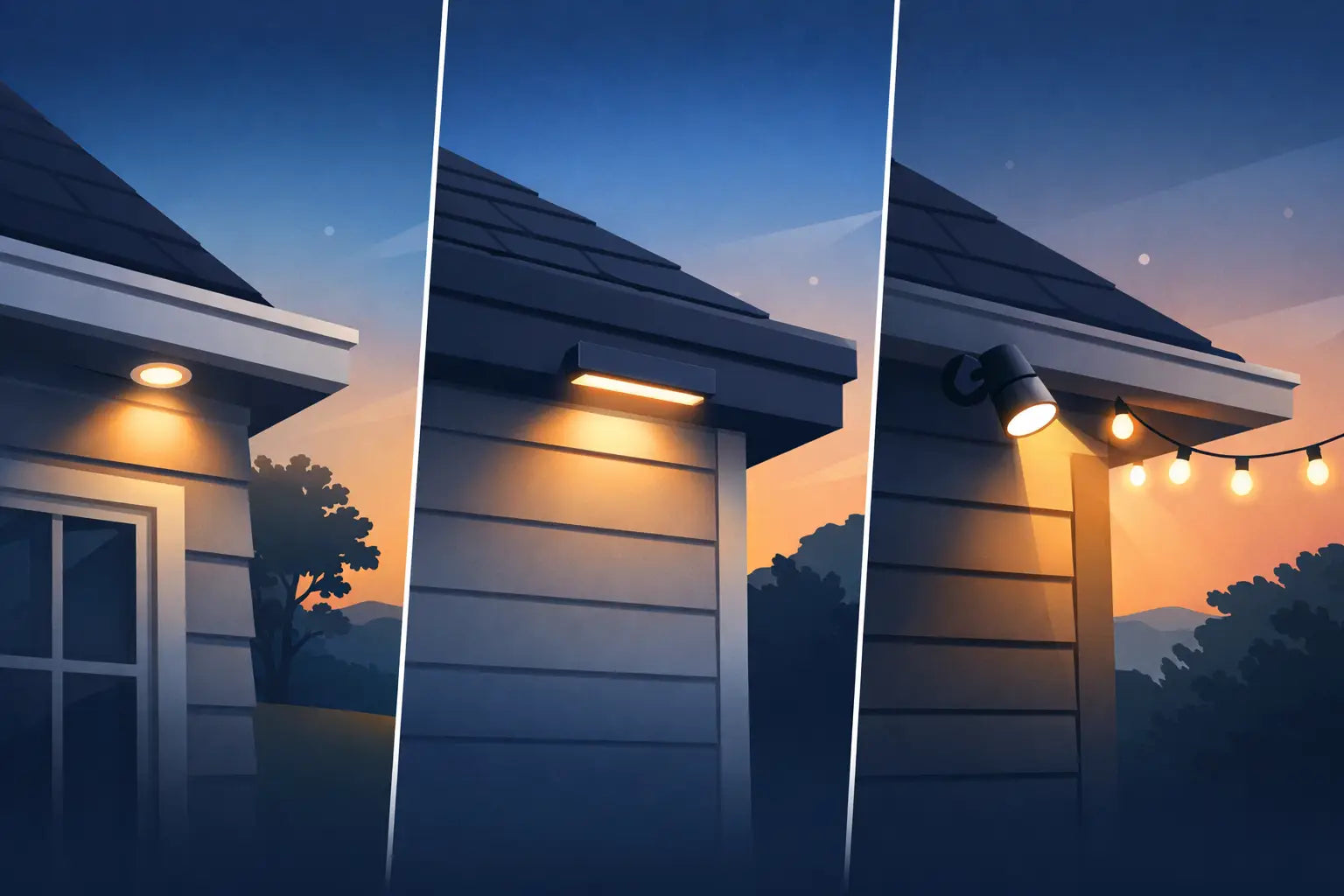
For most homeowners, fascia is the cleanest place to mount permanent outdoor lighting. It gives you a consistent run along the roofline, keeps fixtures tucked up neatly, and helps the lighting effect wash the house the way it should. But fascia boards are not all the same, and neither are mounting conditions. Material, board profile, soffit depth, light spacing, and the specific Govee system you are using all affect which mount style will work best.
How fascia lighting mount options change the install
A mount does more than hold a light in place. It controls angle, spacing, and consistency across the entire run. That matters because permanent outdoor lighting only looks polished when the lights sit in the same position from one section to the next.
Stock adhesive pads and generic clips can work for a short test section, but fascia installations ask more from the hardware. Heat, cold, rain, UV exposure, and surface variation all put stress on the mount. If one light tilts, sags, or separates from the board, the whole roofline starts to look off.
Purpose-built fascia mounting options solve that by giving each puck or fixture a repeatable position. That means straighter lines, better beam placement, and less guesswork while you are on the ladder. It also means less rework later.
The main fascia lighting mount options to consider
The right choice usually comes down to how permanent you want the installation to feel, how much surface area you have on the fascia, and whether you need a mount designed around a specific Govee light style.
Surface-mounted puck holders
This is the most common option for permanent outdoor puck lights. A surface-mounted holder attaches directly to the fascia and keeps each light locked into a consistent position. For homeowners using Govee permanent outdoor lights, this style is often the cleanest and most reliable choice.
The big advantage is control. You are not depending on adhesive alone, and you are not trying to improvise spacing with a generic clip. A properly fitted puck holder keeps the light from rotating and helps maintain the intended throw pattern on the wall below.
Where this option shines is long, visible rooflines. If you want that crisp, even look from the street, a fitted surface mount gives you a better shot at getting it right the first time.
Snap-in or clip-style mounts
Clip-style fascia mounts can make installation faster, especially when you are working through a long run and want a mount that holds the light body securely without much adjustment. These are useful when the product is designed for the exact light model you are installing.
The trade-off is that fit matters even more here. If the clip is too loose, the light may shift over time. If it is too tight or not designed for that exact fixture, installation becomes frustrating fast. This is where product-specific design makes a real difference.
Screw-fastened mounts
For homeowners who want a true permanent installation, screw-fastened mounts are hard to beat. They hold stronger through seasonal expansion, high heat, and moisture swings, and they are less likely to fail than adhesive-only setups on painted or aging fascia.
This style does require a little more commitment. You need to be comfortable fastening into the board, and you want to make sure your layout is correct before you start. But for most exterior installs, that trade-off is worth it. You get more confidence in the hold and fewer worries about sections peeling away months later.
Adhesive-assisted mounts
Some fascia lighting mount options use adhesive as part of the install, either as the primary method or as added support during placement. These can be appealing because they are quick and reduce the amount of drilling.
Still, adhesive performance depends heavily on surface prep and weather conditions. Freshly cleaned, smooth surfaces give better results than dusty, oxidized, or textured boards. On fascia exposed to strong sun or repeated moisture, adhesive-only methods can be the weak point in the system. They may work in some situations, but they are rarely the first choice for a permanent exterior setup.
Choosing fascia mounts by fascia type
Not every roofline gives you the same working conditions, so the best fascia lighting mount options depend on what is actually on your house.
Wood fascia
Wood fascia is usually the most forgiving. It gives you good purchase for screws and tends to work well with fitted mounts. If the board is painted and in solid condition, you have the most flexibility here.
The main thing to watch is aging paint or soft spots. A strong mount is only as good as the surface behind it. If the wood is flaking or compromised, address that before installing permanent lights.
Aluminum-wrapped fascia
Wrapped fascia looks clean, but it adds a layer of complexity. You may be fastening through thin metal over a wood substrate, and surface-only adhesion can be less predictable if the finish is slick or weathered.
In these cases, mount design matters. You want something that sits flat, installs cleanly, and does not distort the wrap. A low-profile mount with secure fastening usually gives better long-term results than trying to rely on tape alone.
Vinyl trim areas
Vinyl can expand and contract more than homeowners expect. That movement can stress a mount over time, especially in areas with strong summer heat or freeze-thaw cycles.
If your install area includes vinyl elements, use a mount that can maintain alignment without depending on a flexible surface to do all the work. A more secure mechanical hold usually performs better in the long run.
Why product-specific fascia lighting mount options matter
This is where many installs go sideways. A generic clip may look close enough on paper, but outdoor lighting systems are not one-size-fits-all. Housing size, cable path, depth, and beam angle all affect how the mounted light will perform.
When a mount is designed around a specific Govee product line, installation gets easier in practical ways. The light seats correctly. The wire routing makes sense. The face of the fixture sits where it should. You spend less time forcing parts together and less time correcting crooked rows after the fact.
That is the real value of engineered mounts. They solve fit problems before they show up on the house.
Installation details that make a fascia setup look better
Even the best mount will not fix a rushed layout. Before fastening anything, dry-fit a few lights and step back from the house. Check how the spacing reads from the driveway and confirm that the beam placement looks even under eaves, peaks, and corners.
Pay close attention to transitions. Gables, inside corners, and roofline changes are where alignment mistakes become obvious. A mount system that handles straight sections well but leaves you improvising at transitions can turn a clean install into a mixed result.
It also helps to think about serviceability. If you ever need to replace a light or access a section of wire, the mount should let you do that without damaging the fascia or tearing apart the whole run.
When to upgrade from stock hardware
If you are installing lights for a holiday season and plan to remove them later, stock hardware may be enough. But if your goal is a permanent exterior lighting system that looks finished year-round, upgrading the mount is usually the smarter move.
Good fascia lighting mount options reduce install time, improve alignment, and cut down on failures that send you back up the ladder. They also make the system look like it belongs on the house. For homeowners who care about curb appeal, that matters just as much as the lighting effects themselves.
PrintWorks 3D focuses on that exact problem - giving Govee users mounts that fit correctly, install cleanly, and hold up outside where generic options fall short.
The best choice is usually the one that matches both your light model and your fascia condition, not just the one that seems fastest to install. If the mount gives you secure hold, consistent placement, and a cleaner finished line, you will notice the difference every evening when the lights come on.
A permanent lighting setup should feel finished when you are done, not like a project you will need to fix after the next season changes.
Share:
Govee Mount Fit Problems Solved
Prism Mounts vs Standard Mounts