

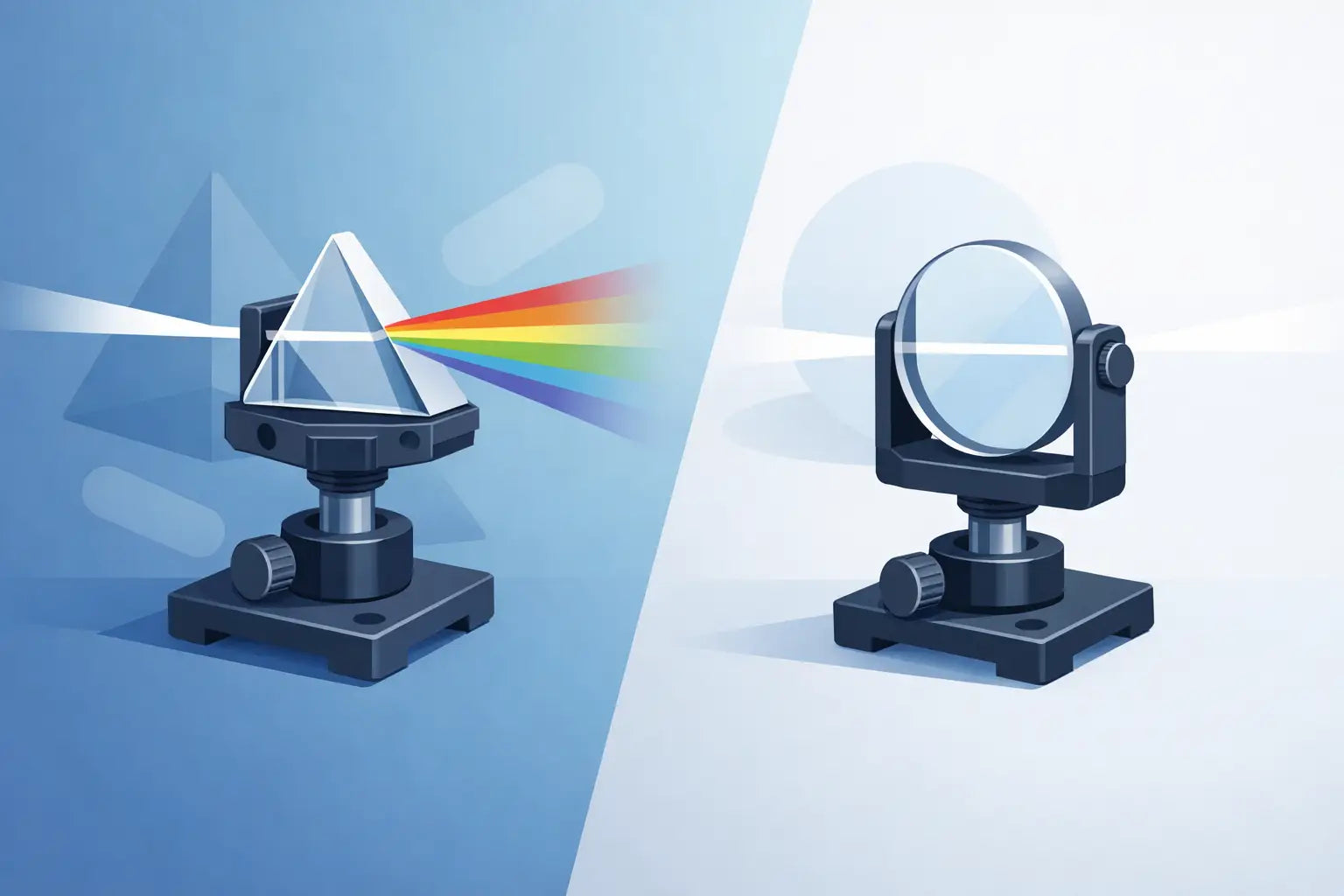
If you have ever stepped back after installing outdoor lights and noticed one section looks perfect while another throws light in the wrong direction, the mount is usually the reason. In the real-world choice of prism mounts vs standard mounts, the difference is not just how the light attaches to your home. It is how clean the line looks, how evenly the effect lands, and how much frustration you avoid while working on a ladder.
For many homeowners, standard mounts are enough on straight runs where the mounting surface and the desired light angle already line up. Prism mounts come into the picture when they do not. If your roofline, fascia, soffit, or trim creates an awkward angle, a prism-style mount can correct the light position so the final look feels intentional instead of improvised.
Prism mounts vs standard mounts: the real difference
A standard mount holds the light in a fixed orientation that closely follows the surface it is attached to. That simplicity is a strength. On flat, straightforward sections of a home, it keeps installation moving and gives you a secure, consistent fit without adding complexity.
A prism mount changes the light’s presentation by compensating for the angle of the mounting surface. Instead of letting the light sit exactly as the fascia or trim dictates, it repositions the light so the beam lands where you actually want it. That matters most when you are trying to maintain a uniform wash or a clean scalloped lighting effect across different architectural sections.
This is why the comparison is not really about which mount is universally better. It is about whether your house gives you a simple mounting plane or an awkward one. Standard mounts are efficient and effective when conditions are right. Prism mounts solve a geometry problem that standard mounts cannot.
Where standard mounts make the most sense
Standard mounts are usually the right choice for long, flat runs under eaves or along fascia boards where the factory light angle already produces the look you want. If the surface is consistent and the lights point correctly without adjustment, there is no reason to complicate the install.
That straightforward setup gives you a few practical advantages. Standard mounts are typically faster to install because you are not evaluating each section for angle correction. They also make planning easier on large projects because spacing and alignment remain predictable from one section to the next.
For homeowners who want a permanent, clean installation without overthinking every roofline detail, standard mounts are often the foundation of the job. They are especially useful when the goal is to replace weak stock clips with something more secure, more weather resistant, and better suited for long-term exterior use.
There is a trade-off, though. Standard mounts do not fix a poor lighting angle. If your soffit depth, trim pitch, or mounting face sends the light too far inward, too far outward, or unevenly across the wall, the mount will hold the fixture securely but it will not correct the visual result.
When prism mounts are worth it
Prism mounts earn their place when appearance depends on angle control. Homes with peaks, gables, unusual fascia profiles, or sections where the light would otherwise tilt off target are where they make the biggest difference.
The value shows up in the finished look. Instead of one section appearing brighter, weaker, or misdirected than the rest, prism mounts help keep the lighting effect consistent. That consistency matters more than many homeowners expect. Once the lights are on at night, even a small angle mismatch can stand out across the front of the house.
Prism mounts are also useful when you are trying to achieve a more polished daytime appearance. A corrected mounting angle can help the lights sit in a way that looks more deliberate and less like an accessory forced onto a surface it was never designed for.
This is the kind of problem that often does not become obvious until installation day. On the ground, the roofline may seem simple. On the ladder, you realize one section of trim changes the light direction just enough to break the visual line. That is exactly where a purpose-built prism mount saves time and avoids a do-over.
Installation differences that matter on a ladder
From a homeowner’s perspective, the best mount is not the one with the most features. It is the one that lets you install confidently, keep alignment tight, and avoid reworking sections after dark when you first see the results.
Standard mounts usually win on speed. If your mounting surface is cooperative, they keep the process simple. Attach, align, and move to the next light. For large perimeter installs, that efficiency adds up.
Prism mounts require a little more attention because they are solving for direction, not just attachment. That does not make them difficult. It just means placement matters more. You are choosing them because you want the light to behave differently than it would in a standard orientation, so careful alignment is part of the payoff.
For many DIY installers, the smart move is not choosing one style for the whole project. It is using standard mounts on the easy runs and prism mounts only where angle correction is needed. That approach keeps the install efficient while improving the sections that would otherwise look off.
Aesthetics, beam direction, and curb appeal
Outdoor lighting should look intentional in daylight and at night. Mount selection affects both.
With standard mounts, the result is often clean and uniform when the architecture cooperates. The light follows the house naturally, and if the beam lands correctly, you get a tidy finished line with minimal fuss.
With prism mounts, the visual benefit is more noticeable on problem areas. They help preserve a consistent lighting pattern across transitions, corners, and angled sections that can otherwise create uneven brightness or distorted effects. If your goal is a crisp, professional-looking install, those small corrections can make the whole system feel better integrated.
This is especially true on homes where the roofline is a major design feature. Peaks, gables, and layered trim can create beautiful nighttime outlines, but only if the lights are aimed properly. A mount that simply holds the light is not always enough. Sometimes the light needs to be presented at the right angle to make the architecture look its best.
Durability is not just about material
Homeowners often think durability starts and ends with stronger plastic or better weather resistance. That is part of it, but mount selection also affects long-term performance.
A mount that fits the application correctly puts less stress on the install over time. If a light is forced into a position that does not suit the surface or intended beam direction, you may get an acceptable result at first, but the setup can feel compromised from day one. The cleaner the fit and the more natural the orientation, the more confidence you have that the system will stay secure and look right through heat, cold, and seasonal changes.
That is one reason purpose-built mounting accessories matter. A good mount does more than hold. It supports alignment, improves consistency, and reduces the chance that you will revisit the same section later because the original setup was only good enough.
How to decide between prism mounts and standard mounts
Start with the surface, not the product. Ask yourself whether the lights already point where you want when held against the mounting area. If the answer is yes, standard mounts are probably the practical choice. They keep the install simple and give you a clean permanent result.
If the answer is no, look closely at why. If the mounting plane angles the light away from the effect you want, prism mounts are likely the better solution. They exist to correct that mismatch.
It also helps to think in sections instead of whole-house terms. One side of your home may be perfect for standard mounts, while a front peak or entry detail may benefit from prism mounts. That mixed approach is often the best balance of cost, install speed, and finished appearance.
For Govee outdoor lighting, especially on homes with varied rooflines, mount choice has an outsized impact on the final result. The lights get the attention, but the mount determines how well those lights actually perform on your house. PrintWorks 3D focuses on that real installation gap - giving homeowners mounting options built for fit, alignment, and weather-resistant durability where stock hardware falls short.
If you are deciding between the two, do not just ask which mount is stronger or easier. Ask which one gives your lights the right position for your home. That is the choice you will appreciate every evening when the lights come on.
Share:
Best Fascia Lighting Mount Options
Installing Lights Under Drip Edge: What Works