
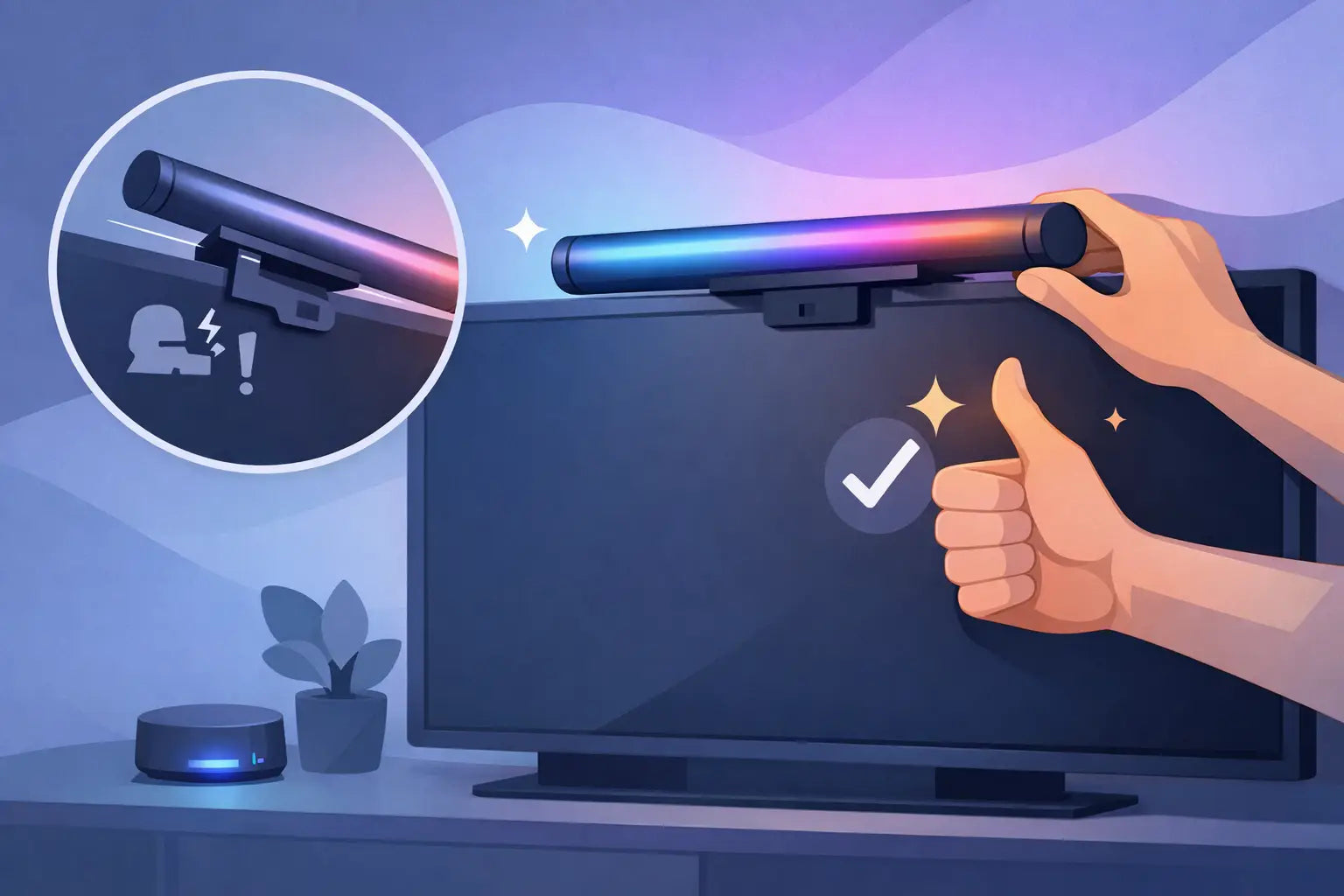
You notice mount fit problems when you're already on the ladder. The light puck sits a little crooked, the spacing looks off under the soffit, or the stock clip does not inspire much confidence once you press it against textured trim. That is where govee mount fit problems solved stops being a search term and starts being the difference between a quick install and a weekend of rework.
Permanent outdoor lighting only looks premium when the mounting does its job. The lights need to sit at the right angle, hold steady through heat and cold, and line up cleanly across rooflines, peaks, and corners. When a mount is loose, too shallow, too generic, or simply not built for the exact light version you own, every small mismatch gets magnified once the full run is installed.
Why Govee mount fit problems happen
Most fit problems are not really about the lights. They come from the space between the light and the house. Rooflines vary. Soffits are not all flat. Fascia boards have different depths. Some homes have aluminum trim, some have painted wood, and some have awkward transitions where one clean mounting surface disappears into another.
Factory hardware is usually designed to work well enough across a wide range of conditions. That sounds fine until you are trying to create a straight, permanent-looking line on a real home. A general-purpose clip can fall short when your install has corners, narrow surfaces, textured material, or exposure to wind and weather.
Version differences also matter more than many homeowners expect. Govee Pro lights, Non-Pro lights, Prism lights, and Light Curtain setups each have their own geometry and mounting needs. A mount that almost fits is not the same as one that actually supports the light body, preserves its angle, and keeps placement consistent from one fixture to the next.
Govee mount fit problems solved with purpose-built mounts
The fix is usually straightforward - use mounts engineered for the exact light type and the exact installation style you are working with. That sounds obvious, but it is the part many people skip at first because the included option looks close enough in the box.
A purpose-built mount changes three things immediately. First, it improves fit around the light body itself, so the light sits more securely instead of shifting during installation. Second, it controls alignment, which helps each puck land in a more consistent position. Third, it increases confidence over time because the mount is designed to behave like part of a permanent setup, not a temporary compromise.
That matters most on exterior installs. Sun exposure, freezing temperatures, rain, and seasonal expansion all test weak mounting decisions. If the light is poorly supported from day one, the install usually gets worse before it gets better.
The fit issues homeowners run into most often
The most common complaint is loose seating. The light goes into the mount, but it does not feel locked in. That can lead to slight rotation, uneven aiming, or movement while fastening. It may seem minor when you install one section, but a long roofline makes inconsistency easy to spot.
The second issue is poor surface compatibility. A mount might technically attach, but not in a way that feels clean or stable on your soffit or trim. If you need to force placement, stack workarounds, or fight every fastener, the problem is not your technique. It is usually the mount.
The third issue is spacing and presentation. Permanent lights look best when each fixture follows the same line and throw pattern. If the mount does not control position well, the finished result can look wavy, crowded, or uneven from the street.
Then there is the retrofit problem. A lot of homeowners install first, live with the result for a while, and then decide they want something more secure and polished. In that case, the right replacement mount needs to improve fit without turning the whole project into a complete tear-off.
Why exact product matching matters
This is where many installs go right or wrong. Pro and Non-Pro systems are not interchangeable from a mounting standpoint just because they are both Govee outdoor lights. Prism and Light Curtain products bring their own mounting demands as well. Controller and power components add another layer because they also need secure placement, not just the lights themselves.
If the mount is designed around the exact product family, installation tends to feel predictable. The part seats correctly. The light orientation stays consistent. You spend less time adjusting and less time second-guessing whether the hardware will still look good next season.
What a better mount should actually do
A good mount should do more than hold the light. It should help you install faster, align more cleanly, and trust the finished result when the weather turns rough.
That starts with fit. The mount should match the light body in a way that reduces play and keeps the fixture positioned as intended. It should also suit the mounting surface you are working with, whether that is a straight soffit run, a peak, a gable detail, or another architectural transition.
Material quality matters too. Outdoor hardware has to handle more than occasional rain. Heat, UV exposure, and winter cold all put stress on anything mounted along the exterior of a home. If the material is not chosen for outdoor use, durability becomes a question mark fast.
Ease of installation also counts. Homeowners do not want a mount that is technically strong but frustrating to use on a ladder. Good design reduces fiddling. It makes placement more intuitive and helps each section go up with less trial and error.
Choosing the right solution for your setup
If you are planning a new install, choose your mounts based on two things first: your exact Govee product and the surface where it will live. That sounds simple, but it prevents most avoidable fit problems before they start.
If you already installed the lights and are unhappy with the result, think in terms of retrofit value. Ask what is bothering you most. Is it looseness, crooked alignment, weak hold, or a finish that does not look truly permanent? The answer helps narrow the right replacement approach.
Some homes need a cleaner low-profile look. Others need stronger support for difficult rooflines or sections exposed to more wind. There is no single perfect mount for every house, and that is the point. Better results come from using mounts designed around real installation conditions instead of asking one generic part to handle everything.
When stock hardware may be enough
There are cases where the included hardware works acceptably. Short runs on forgiving surfaces, mild exposure, and homeowners who are less concerned about exact visual uniformity may get by just fine. Not every install is high risk.
But if you want the lights to look built in, stay aligned, and feel truly permanent, acceptable is usually not the standard you are aiming for. That is when upgrade mounts make the most sense.
The payoff of solving fit problems early
When the mount fit is right, the whole project changes. Installation feels more controlled. The lights line up better. You stop spending time compensating for hardware and start seeing the finished look take shape.
That payoff continues after install day. Better fit means less chance of shifting, sagging, or visual drift over time. It also means the lighting system looks more intentional, which is a big part of why homeowners choose permanent outdoor lights in the first place.
For buyers who care about curb appeal, durability, and not climbing the ladder again to fix preventable issues, this is where engineered accessories earn their keep. PrintWorks 3D focuses on these real-world fit problems because they are the difference between a lighting system that is merely installed and one that actually looks finished.
Govee mount fit problems solved means fewer compromises
The real solution is not a trick, a hack, or extra adhesive. It is better hardware matched to the product and the house. Once you stop asking generic mounts to do a custom job, most of the frustration starts to disappear.
If your lights are loose, uneven, awkward on the surface, or just not giving you that clean permanent look, the issue is often not the lighting system at all. It is the mount. Fix that piece, and the rest of the install usually starts making sense fast.
A permanent lighting setup should feel solid the day it goes up and still look right when the seasons change. That is the standard worth building toward.
Share:
Custom Govee Controller Bracket Guide
Best Fascia Lighting Mount Options