

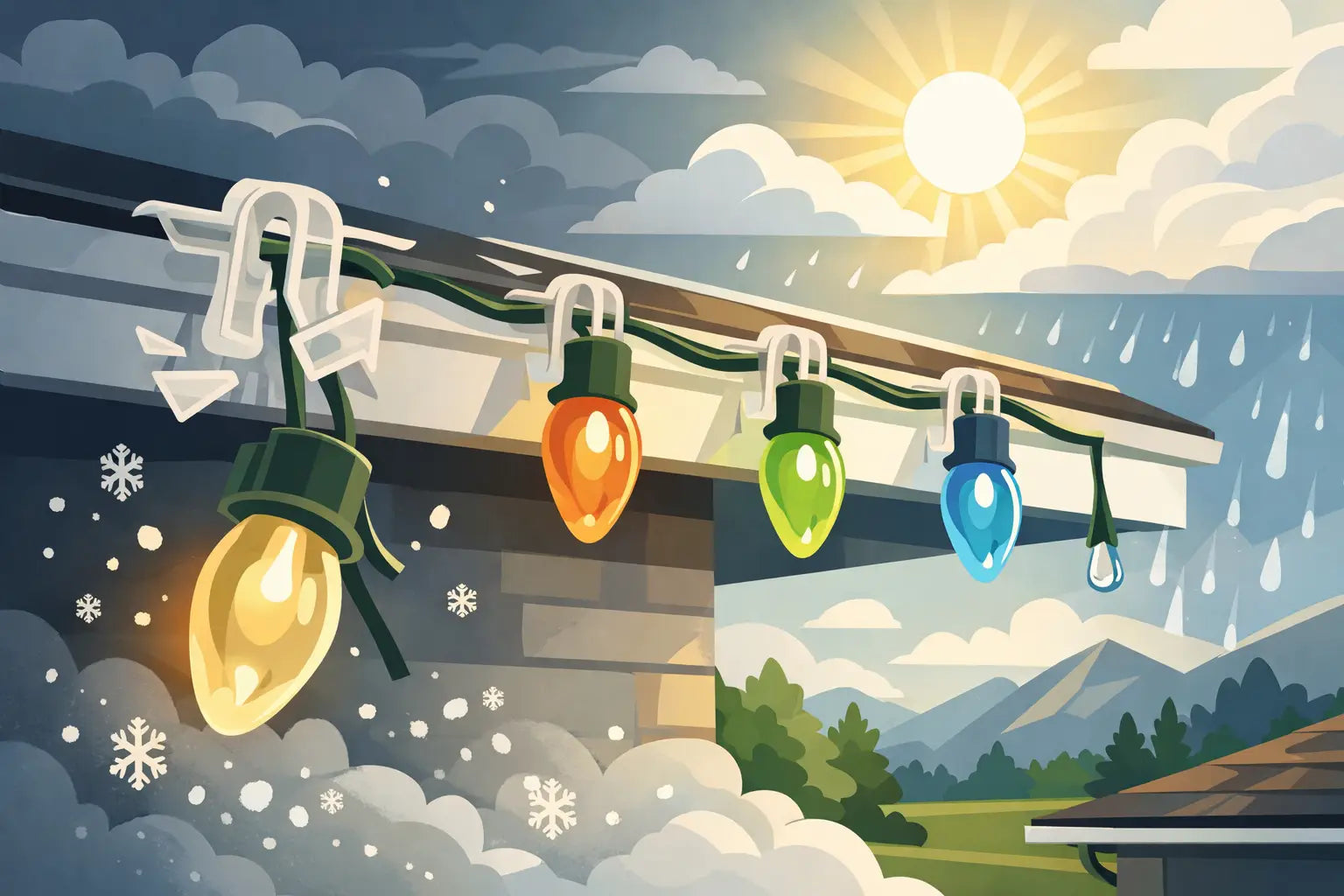
You usually find out why do outdoor light clips fail at the worst possible moment - after a row of lights starts sagging, one section drops out of alignment, or a clip lets go after a weather swing. For homeowners installing permanent outdoor lighting, that failure is not just annoying. It means more ladder time, a less polished look, and more stress over whether the rest of the run is about to do the same thing.
The short answer is simple: most outdoor light clips fail because they are asked to do a permanent job with temporary-grade design. Sun, moisture, temperature swings, surface texture, and poor fit all expose weak points fast. If the clip is generic, adhesive-only, or not designed around the exact light and mounting surface, failure becomes a matter of when, not if.
Why do outdoor light clips fail on permanent installs?
Permanent lighting creates a different set of demands than seasonal string lights. A clip that survives a few holiday weeks under a sheltered eave may not hold up through summer heat, winter cold, heavy rain, roofline expansion, and months of constant tension from wire management.
This is where many stock mounting options fall short. They are often designed to be easy to package and simple to apply, not necessarily engineered for long-term exterior performance. That trade-off shows up later as loosening, twisting, cracking, or total detachment.
A clean install depends on more than just sticking a clip in place. It depends on surface prep, material choice, exact fit, and how the clip handles real-world movement over time.
Adhesive breaks down faster than people expect
The most common failure point is the adhesive itself. Many outdoor light clips rely heavily on peel-and-stick backing, and adhesive has limits. Even good adhesive can struggle when it is applied to dusty soffits, chalky painted trim, rough siding, or cold surfaces.
Then weather gets involved. Heat can soften adhesive and let the clip creep out of position. Cold can make it brittle. Moisture can work its way into the bond line, especially if the surface was not fully clean or dry during installation. Over time, those small losses in grip add up.
Adhesive-only mounting also depends on a lot of things going right at once. The surface needs to be smooth enough, the pressure during installation needs to be firm and consistent, and the clip cannot be under too much tension from the light wire or puck body. That is a narrow window for something meant to stay up year-round.
The clip does not actually fit the light correctly
A clip can look close enough on day one and still fail because the fit is wrong. This happens all the time with generic clips used on smart lighting systems that have specific wire paths, body dimensions, and mounting angles.
If the light sits loosely in the clip, vibration and movement gradually work it out of position. If the clip is too tight, the material can stay under constant stress and crack sooner. If the wire routing is awkward, the cable can pull against the mount and create leverage that slowly peels or twists it away from the surface.
That is one reason product-specific mounts matter. A mount designed around the actual light shape distributes load better, holds alignment better, and reduces the little stress points that cause early failure.
UV exposure quietly weakens plastic
Sun exposure is rough on outdoor plastics. Some clips become chalky, brittle, or faded after enough UV exposure, especially on south-facing rooflines that get full sun for long stretches.
The problem is not always dramatic at first. A clip may hold through one season, then start cracking around the thinnest point or flex area the next. Once UV has weakened the plastic, even a moderate temperature shift or a little pressure during maintenance can finish the job.
This is where material quality matters more than most people realize. Not all plastics marketed for outdoor use perform the same way over time. A mount that looks fine fresh out of the package may not have the long-term weather resistance needed for a true permanent install.
Weather expansion and contraction create constant stress
One of the less obvious answers to why outdoor light clips fail is movement. Your home moves more than it seems to. Fascia, soffits, metal trim, vinyl, and even mounting hardware all expand and contract as temperatures change.
That movement may be small, but it happens over and over. If a clip is rigid in the wrong way, or if the wire run is too tight, those daily cycles can transfer stress into the mounting point. Over months, clips loosen, adhesive edges lift, and alignment drifts.
Different surfaces also behave differently. Metal trim can heat up fast and cool down fast. Vinyl can flex and shift. Painted wood can hold moisture and then dry out. A clip that performs well on one surface may struggle on another, even in the same house.
Installation mistakes make weak clips fail even faster
Not every clip failure is purely the clip’s fault. Installation conditions matter. A strong mount installed on a dirty, oily, oxidized, or damp surface is still starting from a disadvantage.
Temperature during install matters too. If adhesive is applied when it is too cold, it may never bond properly. If wires are pulled too tight, each clip carries more force than it should. If spacing is inconsistent, certain points end up overloaded while others do very little.
Even simple alignment issues can create problems later. A clip installed slightly off-angle can place constant side pressure on the light body. That pressure might not show immediately, but over time it can cause rotation, stress cracking, or release.
Wind and water expose bad mounting fast
A calm day can make almost any install look solid. Wind is where weak mounting gets tested. Repeated gusts create tiny movements at the clip, light body, and wire. If the system already has a weak bond or poor fit, those movements grow.
Water is just as revealing. Rain can work into imperfect adhesive bonds, freeze-thaw cycles can widen small gaps, and runoff patterns can keep certain sections wetter longer than expected. Corners, peaks, and exposed edges usually fail first because they take more weather than sheltered straight runs.
That is why a mounting solution has to be built for the actual installation environment, not just the product box claim that says outdoor use.
Why better mounting design changes the outcome
A better clip is not just stronger plastic or stickier tape. It is a better system. It accounts for the light’s exact dimensions, the direction of load, the way the wire exits, and the reality that outdoor conditions will keep applying stress long after installation day.
Purpose-built mounts reduce guesswork. They help keep spacing clean, maintain beam direction, and prevent the shifting that makes a permanent setup look sloppy. Just as important, they reduce the odds that you will be back on the ladder replacing failed pieces a few months later.
For Govee permanent lights, this is especially relevant because the finished look matters. These are not throwaway holiday clips hidden in a tree. They are part of the home’s exterior presentation. A sagging or misaligned section stands out right away.
That is why many homeowners move away from generic stock hardware and toward product-specific mounting accessories. PrintWorks 3D was built around exactly that problem - creating mounts designed for fit, durability, and easier long-term installation performance.
How to avoid outdoor light clip failure
If you want clips to last, think less about quick attachment and more about long-term load management. Start with a mount designed for the exact light model, not a close-enough substitute. Fit matters more than it seems.
Prep the surface carefully. Remove dust, oxidation, grease, and moisture before anything goes up. Install in the temperature range the mounting method calls for, and avoid rushing onto surfaces that are too cold or damp.
Give the wire run some breathing room. Cables should be managed neatly, but not so tightly that they pull against each mount. Pay extra attention to corners, peaks, and transition points where tension tends to build.
And be honest about permanence. If you want a true long-term exterior install, temporary-grade clips are rarely the best answer. The cheapest mounting option often becomes the most expensive one once you factor in rework, replacement time, and the frustration of fixing failures overhead.
A good outdoor lighting install should disappear into the architecture and stay there. If your clips are doing their job, you do not think about them at all. That is usually the clearest sign you chose the right mounting solution from the start.
Share:
Permanent Light Brackets vs Stock Hardware
Best Mounts for Govee Gables