
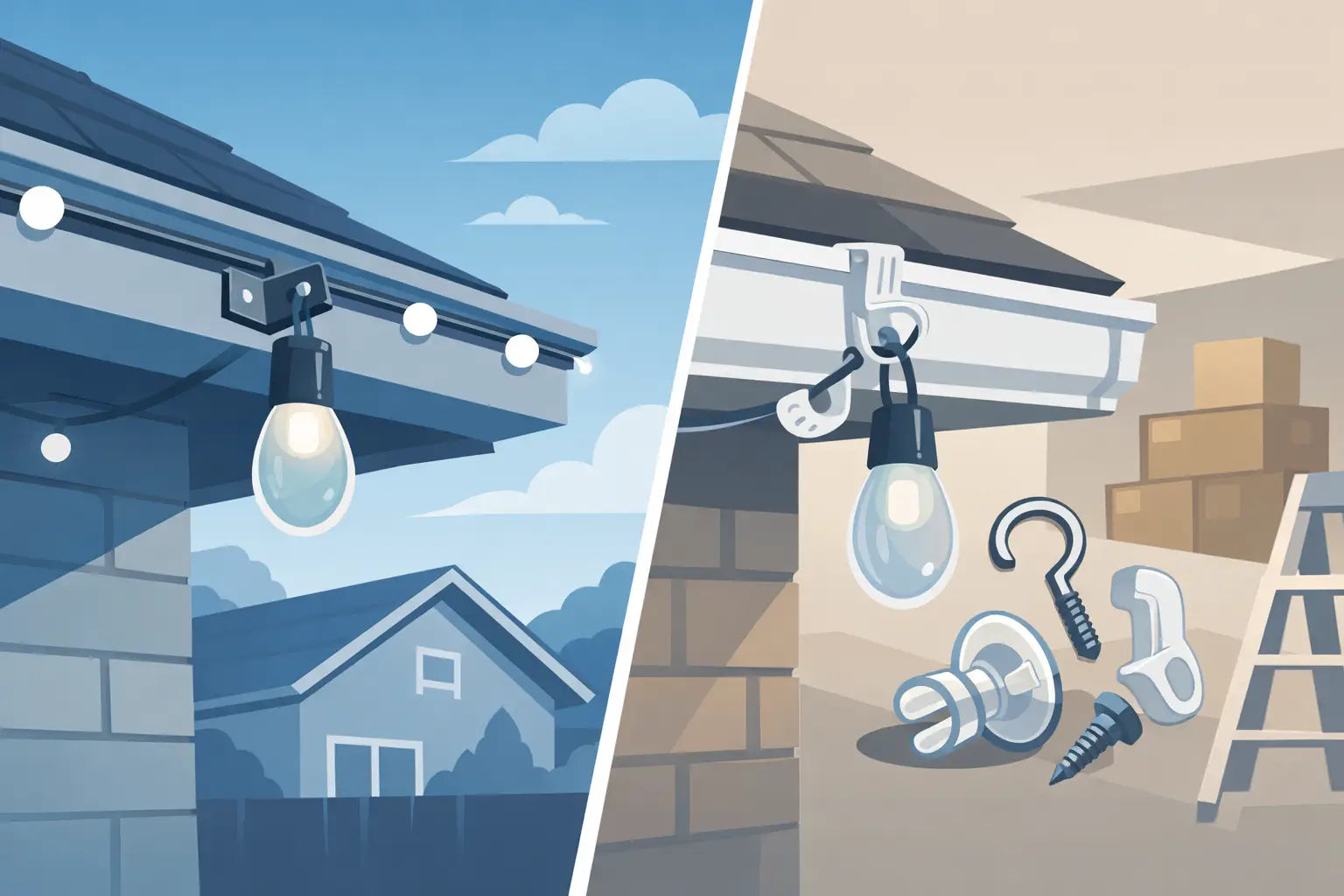
If you have ever been halfway up a ladder trying to get a roofline section straight with factory clips that do not quite sit right, you already understand the real issue behind permanent light brackets vs stock hardware. This is not just about holding a light in place. It is about getting a clean, consistent install that stays put through heat, rain, wind, and season after season of use.
For permanent outdoor lighting, the mount matters more than most people expect. The lights get the attention, but the hardware determines alignment, spacing, security, and how finished the whole project looks from the street. A smart lighting system can be a great investment, but stock mounting pieces often feel like the part of the kit that asks you to improvise.
Permanent light brackets vs stock hardware: what changes in the real world?
On paper, stock hardware sounds fine. It came with the lights, it is ready to use, and it seems like the simplest option. For some installations, especially short runs on forgiving surfaces, it may be enough to get the system up and running.
The problem shows up when the house is not simple. Peaks, soffits, trim profiles, tight corners, uneven fascia, and longer roofline runs expose the limits fast. Hardware that works in a basic test setup can become frustrating on an actual home exterior where consistency matters.
Permanent light brackets are built around the idea that outdoor lighting should look intentional. That means holding each light at the correct angle, keeping spacing more consistent, and creating a more secure connection to the mounting surface. Instead of asking the installer to fight the hardware, purpose-built brackets are meant to reduce that friction.
Fit is usually the first reason people upgrade
The biggest difference between permanent light brackets vs stock hardware is fit. Stock clips are designed to be broadly usable, which usually means they are a compromise. They may work across a range of surfaces or conditions, but they are not always optimized for the exact light model, wire path, or mounting location on your home.
A bracket designed specifically for a Govee lighting setup solves a different problem. It is made to match the product, not just loosely accommodate it. That changes the install experience right away. Lights seat more predictably. The wire routing tends to be cleaner. The final line looks more even because each fixture is held in a repeatable position.
That consistency matters more than people expect. When one light sits slightly off-angle, most homeowners do not notice it up close. Step back to the curb at night, though, and uneven projection or spacing becomes obvious. A permanent lighting system should look like part of the home, not an afterthought.
Durability is where stock hardware starts to show its limits
Outdoor installs are hard on mounting components. Sun exposure, temperature swings, moisture, and wind all work against the connection point. A mounting method that feels acceptable on install day may not hold that same confidence after a year of weather.
Stock hardware is often built to meet a baseline need. It gets the product mounted, but not always with the level of material performance or hold strength homeowners expect from something marketed as permanent. That does not mean every factory part fails. It means the margin for error is usually smaller.
Permanent brackets are typically chosen by people who want more confidence over time. Better material selection and a more secure mounting geometry can make a major difference, especially on exposed sections of the house. If your lights are installed where wind can catch them, or where direct sun bakes the surface daily, stronger purpose-built hardware becomes less of an upgrade and more of a practical choice.
Clean lines are not cosmetic, they are part of the job
A lot of homeowners start this project focused on function. They want the lights up, they want app control, and they want a system they can use year-round. Then installation begins, and appearance becomes a bigger priority.
That makes sense. Permanent outdoor lights live on the house every day, not just during holidays. If the mounts look bulky, inconsistent, or improvised, the whole system can feel less premium than it should.
This is where dedicated brackets usually outperform stock hardware. They help create a cleaner install line under soffits and along roof edges. They keep lights positioned in a more uniform way. They can also reduce the visual clutter that comes from lights twisting or sitting unevenly.
For homeowners investing in curb appeal, that finish matters. You are not just mounting LEDs. You are adding a visible system to the exterior of your home, and the hardware plays a major role in whether it looks polished or pieced together.
Installation time is not just about speed
Most DIY buyers do not mind doing the work. What they want is less frustration. There is a difference between an install that takes time because the project is large and an install that takes time because the hardware keeps fighting you.
Stock hardware can create delays in small ways. You adjust one light, then another shifts. You reach a corner and realize the fit is awkward. You mount a section, step down to check the line, and see that several fixtures are not sitting the same way. None of these issues sounds major by itself, but together they stretch the project and make ladder work more tedious than it needs to be.
Purpose-built permanent brackets are meant to make placement more predictable. That does not guarantee every install becomes easy, because house exteriors vary a lot. But it often reduces the trial-and-error part of the job. When the hardware is engineered for the actual light and intended use case, the process feels more controlled.
That is a real benefit when you are working overhead, measuring runs, and trying to finish the job safely in a weekend.
When stock hardware may still be enough
There are situations where using the included hardware makes sense. If you are testing a lighting system before committing to a more finished install, stock parts can be a reasonable starting point. The same goes for shorter, less visible sections where appearance and long-term exposure are less of a concern.
Some homeowners also have very straightforward mounting surfaces where the factory setup performs acceptably. If the run is short, protected, and easy to access later, the risk of needing adjustments may be lower.
The trade-off is that acceptable is not always the same as confidence. If you already know you want a permanent result, the cost and effort of doing it twice can outweigh the appeal of using whatever came in the box.
Where permanent brackets make the biggest difference
The more demanding the install, the more value dedicated brackets tend to add. Long rooflines are one example because minor inconsistencies become more visible over distance. Peaks and gables are another, since angle and alignment become harder to fake. Exposed areas with stronger wind or weather also put more pressure on the mounting method.
Retrofitting an existing setup is another common reason to switch. A lot of homeowners get the lights up with stock hardware, live with it for a while, and then decide the result is not as secure or polished as they want. Upgrading the mounts can turn a workable installation into one that actually feels finished.
For Govee users who want a cleaner, stronger, more purpose-built setup, this is exactly where specialized products earn their place. PrintWorks 3D focuses on mounts engineered for real installation problems, not generic assumptions about how every home exterior behaves.
The better choice depends on your standard
If your goal is simply to attach lights and turn them on, stock hardware may get you there. If your goal is a permanent outdoor lighting system that looks straight, stays secure, and feels worthy of the investment, brackets built for the job are usually the smarter route.
That is the real answer to permanent light brackets vs stock hardware. It is not about whether factory parts can work. It is about whether they deliver the level of fit, durability, and finish you want once the install is complete and visible every day.
A good mount does not draw attention to itself. It quietly keeps everything aligned, secure, and clean through weather and time. When that happens, the lighting gets to do what it is supposed to do - make your home look better every night you turn it on.
Share:
How to Replace Govee Light Mounts
Why Do Outdoor Light Clips Fail?