
If you are deciding between govee pro mounts vs clips, the real question is not just what sticks to the house today. It is what still looks straight after summer heat, winter cold, wind, rain, and a few seasons of expansion and contraction along your roofline. For permanent outdoor lighting, that difference matters.
Stock clips can work, especially when conditions are ideal and the surface is simple. But most homeowners are not installing lights on a perfect test bench. They are working on soffits, fascia, peaks, and trim details that vary from section to section. That is where the gap between a generic clip and a purpose-built mount starts to show.
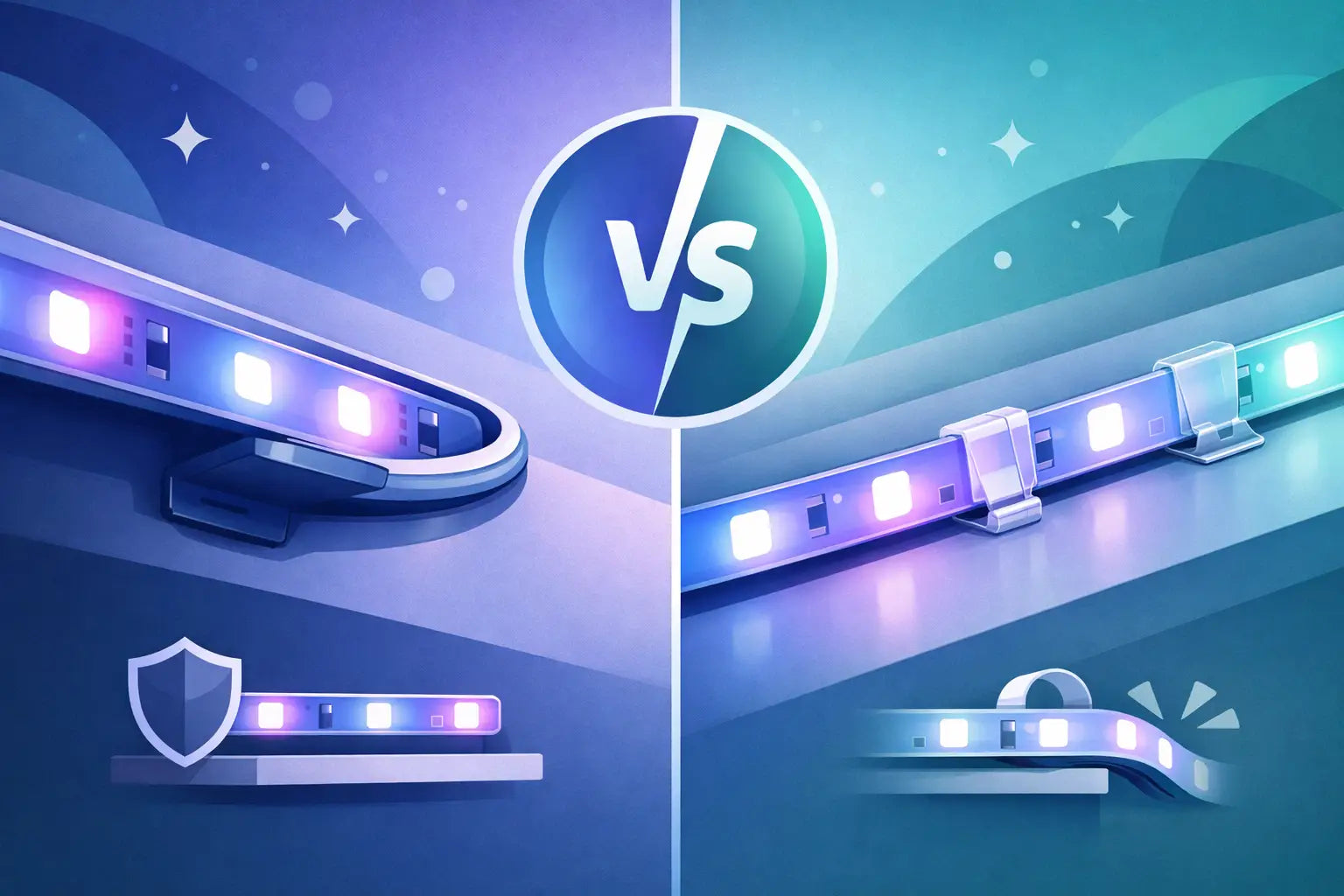
Govee Pro mounts vs clips: the core difference
Clips are usually designed to hold the light in place with minimal hardware and minimal install time. They can be fine for a quick setup, and for some homeowners that is enough. If your priority is just getting lights up fast and your install area is flat, accessible, and sheltered, clips may do the job.
Pro mounts are a different category. They are built around fit, alignment, and retention. Instead of simply gripping a light, a well-designed mount supports the fixture in a more controlled way so the angle stays consistent and the installation looks intentional from the street. That cleaner result is usually why people start looking for an upgrade in the first place.
The biggest difference is long-term confidence. Clips tend to be more forgiving at the start and less reassuring over time. Mounts usually ask for a little more planning up front, then pay you back with a more secure, polished installation.
Where clips make sense
There is no need to pretend clips never work. They can be the right answer for a homeowner who wants a basic install without adding extra parts. If you are testing a layout, mounting in a less exposed area, or working on a short run where appearance is not as critical, clips can be practical.
They also appeal to people who want the lowest-friction install. Less hardware can mean less setup, less measuring, and fewer decisions. If you are comfortable with the possibility of occasional adjustment later, that trade-off may be acceptable.
The catch is consistency. On long rooflines or prominent front-facing sections, even small shifts in light angle become noticeable. A clip that is good enough on one section may look less precise on another. That is where a home starts to look like it was fitted in pieces instead of designed as one clean system.
Why many homeowners move from clips to mounts
Most upgrades happen for one of three reasons. The lights do not sit at the angle the homeowner expected, the hardware does not feel secure enough for a permanent install, or the finished look is not clean enough once the sun goes down and every misalignment becomes obvious.
A purpose-built mount addresses all three. Better support means better light positioning. Better fit means less movement. Better alignment means the lighting effect is more even across the whole house. That matters whether you want subtle accent lighting year-round or a sharp holiday display that does not look improvised.
For DIY homeowners, there is also a ladder factor. Nobody wants to revisit the same section because a clip shifted, loosened, or never held quite right. A mount that is designed for the fixture and installation surface can reduce the need for those return trips.
Durability is where govee pro mounts vs clips gets real
When people compare govee pro mounts vs clips, durability is usually the deciding factor. Outdoor installs deal with heat, cold, moisture, UV exposure, and wind load. Even if the light itself is built for outdoor use, the mounting method still determines whether the system stays where it should.
Clips can lose points here because they often depend on a simpler hold. That does not automatically mean failure, but it does mean less margin for error when the weather gets aggressive or the surface is less than ideal. The longer the run and the more exposed the location, the more that margin matters.
Pro mounts are generally chosen for a more permanent result. With a design that matches the light and supports placement more deliberately, they tend to inspire more confidence over time. Material quality matters too. If the mount is made from weather-resistant material and designed specifically for exterior use, you are not just buying attachment. You are buying stability.
That is one reason specialized maker brands like PrintWorks 3D exist. Homeowners want something better than a universal compromise, especially when they have already invested in permanent outdoor lighting.
Appearance matters more than most people expect
A lot of buyers start this decision thinking about security and end up caring just as much about appearance. That is not vanity. It is the whole point of permanent lighting. If the install looks uneven in daylight or throws inconsistent light patterns at night, the result feels unfinished.
Clips can create acceptable results, but acceptable is not the same as dialed-in. A cleaner mount system helps lights sit with more uniform spacing and direction. On gables, peaks, and long fascia runs, that control makes a visible difference.
This is especially true on homes with strong architectural lines. When your roofline is clean, crooked or inconsistent light placement stands out fast. A more structured mount helps protect the look you were trying to create in the first place.
Installation speed vs installation quality
This is where it depends on your priorities. Clips can be faster, particularly if you are doing a simple install and want fewer steps. If your main goal is finishing the project in the shortest possible time, clips may seem attractive.
But fast is not always efficient. If a mount takes a little more effort and gives you better placement on the first try, that can save time overall. Repositioning lights, correcting angle issues, or dealing with loose sections later is its own kind of labor.
For many homeowners, the better question is not which option installs faster in perfect conditions. It is which option gives you the fewest headaches once you are on the ladder and trying to get a clean result across multiple roof sections.
Which option is better for different homes?
If your home has short runs, limited exposure, and easy access, clips may be enough. They can also be a reasonable choice for temporary testing or for homeowners who are comfortable monitoring and adjusting the setup if needed.
If your home has long rooflines, visible front elevation sections, tricky peaks, or weather exposure, mounts are usually the stronger choice. The more permanent you want the installation to feel, the more a purpose-built mounting system makes sense.
There is also a budget reality. Clips may cost less upfront. Mounts can cost more, but they often protect the investment you already made in the lighting system by improving fit, hold, and finished appearance. For many homeowners, that value shows up the first time they step back from the curb and see straight, consistent lines instead of slight variations everywhere.
The better question to ask before you buy
Instead of asking whether clips can work, ask what level of finish you want when the project is done. If you want a basic install and are comfortable with some compromise, clips may be enough. If you want a cleaner look, stronger hold, and fewer reasons to climb back up later, pro mounts are usually the better answer.
That is especially true for homeowners who bought permanent outdoor lights because they wanted a true permanent setup, not a temporary-looking one with better LEDs.
A good mounting solution should make installation easier, help lights stay aligned, and hold up in real weather. When it does all three, your lighting system starts to feel complete.
If you are still weighing the choice, think about your most visible roofline first. That section will tell you what matters more on your house: getting it up quickly, or getting it right the first time.
Share:
Govee Mount Compatibility Chart Made Simple
How to Secure Outdoor Light Controllers