

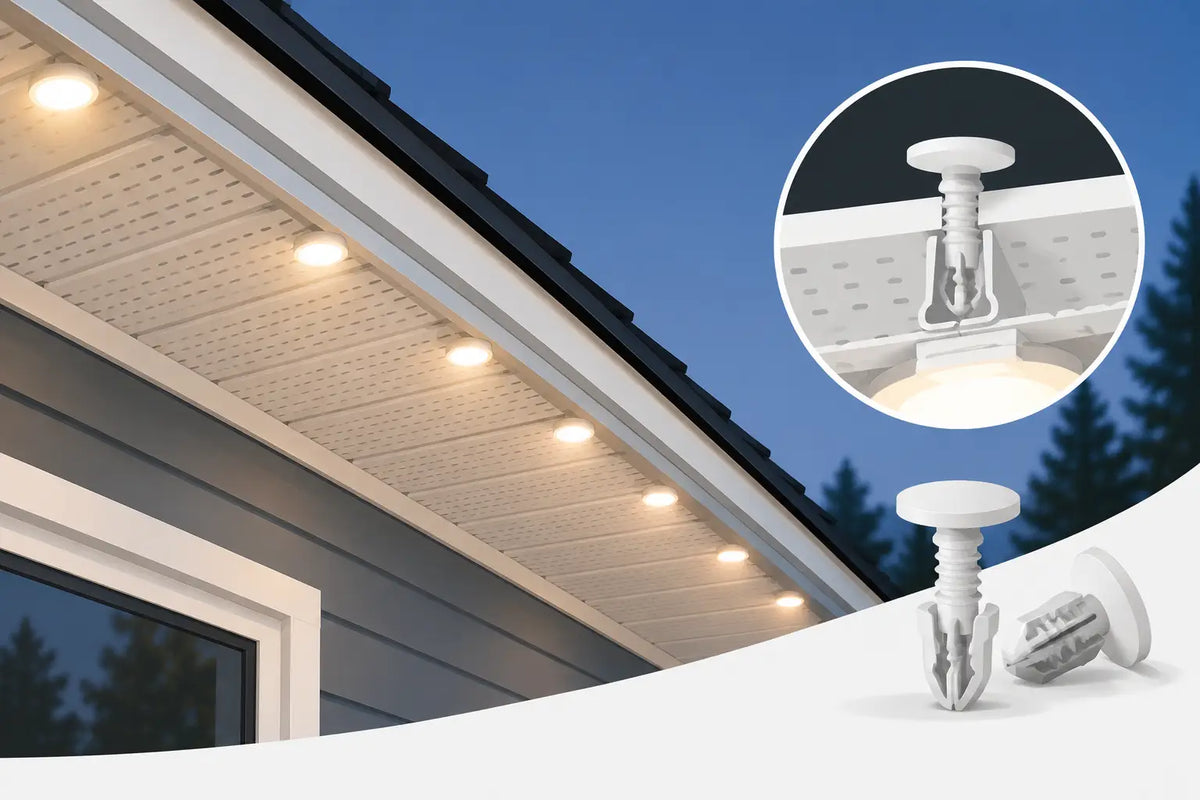
A permanent light installation can look polished for years, or it can slowly sag, shift, and leave a row of unnecessary holes under the eaves. Vinyl soffit fasteners play a bigger role than most installers expect, especially when you are mounting outdoor smart lights where alignment, weather exposure, and long-term holding power all matter.
The key is recognizing what the vinyl soffit does and does not provide. It creates a clean finished surface below your roofline, but many vinyl panels are thin and are not designed to carry a concentrated load by themselves. Choose the wrong fastener, overtighten it, or rely on the vinyl alone, and a clean installation can become a loose one.
Choosing Vinyl Soffit Fasteners That Hold
Start with the mounting location, not the hardware bin. Look behind the soffit panel and determine whether there is solid wood, a framing member, or another suitable backing material where each mount will land. A screw that passes through vinyl and bites into solid material has a completely different level of holding strength than one gripping only the panel.
For permanent outdoor lighting, exterior-rated screws are usually the right choice. Stainless steel fasteners offer strong corrosion resistance in wet or coastal conditions. Quality exterior-coated screws can also work well in many climates, provided the coating is intended for outdoor exposure. Avoid plain steel screws, which can rust, stain the soffit, and become difficult to remove when you need to service a light or replace a mount.
The correct screw length depends on the mount thickness, the vinyl panel, the air gap behind it, and the depth of backing material available. The goal is enough thread engagement in solid backing without driving a long screw where it could create a problem above the soffit. In many installations, a short exterior screw in the #6 or #8 range is appropriate, but the best size always depends on the specific mount and substrate.
Head style matters as well. A pan head or washer-style head often gives a mounting bracket better surface contact than a small countersunk head. That broader contact helps prevent the fastener from pulling through the mount under repeated vibration, temperature changes, or the weight of a cable run.
Do not use drywall screws for exterior lighting work. They are brittle, not made for weather exposure, and can corrode quickly. Likewise, self-tapping screws may make installation faster in thin material, but they should not be mistaken for a structural attachment method when there is no solid backing behind the vinyl.
Vinyl Is a Finish Surface, Not a Structural Anchor
Vinyl soffit panels expand and contract as temperatures change. They also flex more than wood or composite trim. If a fastener clamps a panel too tightly, it can distort the surface, crack the vinyl around the hole, or prevent normal movement. That is why fastener tension matters just as much as fastener type.
Drive the screw until the mount is secure and seated, then stop. Do not crush the vinyl in an effort to make the installation feel extra tight. A properly designed mount should sit flat and hold the light in the correct position without requiring excessive screw pressure.
This is especially relevant for Govee permanent outdoor lights. Each individual light is light in weight, but a full installation includes repeated mounts, wire routing, connectors, and long spans exposed to wind, heat, cold, and seasonal moisture. The mounting system should keep every light pointed consistently while preventing the wiring from putting sideways stress on the fasteners.
If there is no backing where you need a mount, pause before drilling. Depending on the construction of your eaves, you may be able to shift the mount slightly to reach solid material, use a compatible backing approach, or choose a mounting location that provides better support. Adding more screws to thin vinyl is not a substitute for fastening into something capable of carrying the load.
Installing Vinyl Soffit Fasteners Without Damage
A clean installation begins with layout. Before drilling, dry-fit several mounts along the soffit and confirm the light direction, spacing, and cable path. Check that the first and last lights in a run have enough clearance around corners, downspouts, and returns. It is much easier to correct spacing before holes are drilled than after the lights are attached.
Use a small pilot hole when the mount design and substrate call for one. A pilot hole can reduce the chance of cracking vinyl and helps keep the screw from wandering, particularly when working overhead on a ladder. Keep the drill straight to the surface so the mount sits flat. An angled screw can pull the bracket out of alignment and create an uneven row of lights.
Install one mount at a time, then step back often. Rooflines can make small alignment errors difficult to see up close. Looking down the run from several feet away helps catch a mount that is rotated, too close to an edge, or not positioned consistently with the rest.
Cable management deserves the same attention as the fasteners. Leave enough slack at connections for service and normal movement, but do not leave loops hanging where they can catch wind or look unfinished. Route cables so they are supported by purpose-built clips or mounts rather than relying on the light housings to carry cable weight.
PrintWorks 3D mounting accessories are designed around the actual shape and installation needs of Govee lighting systems, helping homeowners achieve a more secure fit than generic clips that force the fixture into an awkward position. Product-specific mounts can make the fastener choice simpler because the mounting hole, light angle, and contact points are already designed for the application.
Match the Fastener to the Mount and the Surface
There is no single screw that is perfect for every soffit. A vinyl-over-wood installation may call for one approach, while an aluminum soffit or a location near a structural trim board may call for another. The mount manufacturer’s recommended screw diameter and head profile should be your starting point, then adjust length based on the material behind the finished surface.
Be cautious with oversized screws. A larger diameter can seem stronger, but it may split backing material, distort a compact mount, or create an unnecessarily large hole in the vinyl. Conversely, a screw that is too small may not fully capture the mounting hole or may loosen over time.
Weather is another practical factor. In areas with intense sun, vinyl can become hotter and more flexible during installation. In very cold conditions, it may become less forgiving. If possible, install when the material is clean, dry, and within a moderate temperature range. That gives you a better feel for how the panel reacts as you tighten each screw.
Common Fastener Mistakes to Avoid
The most common failure is treating the vinyl panel as the only anchor. It may hold at first, particularly with a lightweight fixture, but repeated temperature cycles and cable tension can gradually enlarge the hole. The result is a mount that shifts, tilts, or pulls away from the soffit.
Another mistake is overtightening. A screw does not need to deform the panel to be secure. Stop when the mount is stable, flush, and unable to rotate by hand. If it still feels loose, the answer may be better backing or a different location, not more torque.
It is also easy to underestimate corrosion. Fasteners under the eaves are somewhat sheltered, but they are not protected from humidity, wind-driven rain, condensation, and salt air. Choosing outdoor-rated hardware from the beginning helps protect both the mount and the appearance of the finished soffit.
Finally, do not skip a final inspection. After all lights are mounted, check every fastener, every cable clip, and each light angle before leaving the ladder. Turn on the system at dusk and view the pattern from the street. A small adjustment at this stage can make the difference between a functional installation and one that looks professionally finished.
The best fastener is not simply the strongest screw available. It is the one that fits the mount, reaches suitable backing, resists the weather, and holds your lights in position without fighting the natural movement of the vinyl soffit.
Share:
Outdoor LED Cable Routing Guide for Clean Installs
7 Outdoor Light Clip Alternatives That Hold Better