

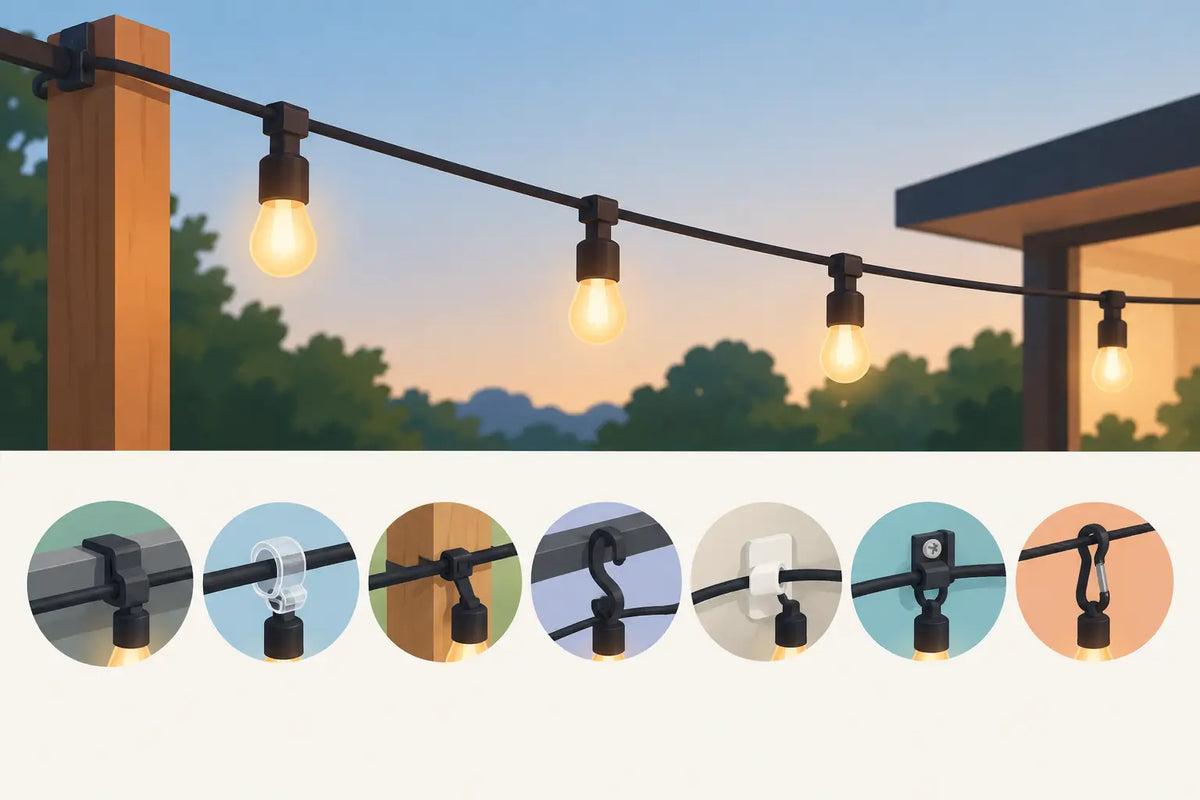
Factory clips can get outdoor lights onto the house, but that is not always the same as keeping them straight, secure, and clean-looking through changing weather. The best outdoor light clip alternatives solve the problems homeowners notice after the ladder is put away: a light that droops, adhesive that lets go, uneven spacing, or a mount that does not sit correctly on the soffit or trim.
For a permanent Govee installation, the mounting method deserves the same attention as the lights themselves. Your roofline may have aluminum soffit, vinyl, painted wood, fiber cement, brick, or a mix of surfaces. The right alternative depends on the light model, the mounting surface, and whether you want a fast seasonal setup or a finished installation built to stay in place.
Why Standard Outdoor Light Clips Can Fall Short
Most stock light clips are designed to cover a broad range of installation situations. That makes them convenient, but it also means they may not account for the exact shape of your Govee light, the thickness of your soffit, or the angle needed to direct each LED properly.
Adhesive-backed clips are especially dependent on surface preparation and weather conditions. Dust, chalky paint, moisture, cold temperatures, and textured surfaces can all reduce their holding strength. Even when the clip stays attached, the light can shift inside it if the fit is loose.
The result is often subtle at first. One puck rotates slightly. A section of cable sags. A row that looked straight during daylight appears uneven when the lights come on at night. For homeowners installing permanent outdoor lighting, those small inconsistencies can take away from an otherwise polished result.
Outdoor Light Clip Alternatives Worth Considering
There is no single best mounting option for every house. Some alternatives prioritize speed, while others prioritize mechanical strength, light alignment, or a low-profile appearance. Here is how the most common choices compare in real installations.
1. Heavy-Duty Adhesive Cable Clips
Larger adhesive cable clips can work well for managing wire runs between lights. They are useful when the main concern is keeping the cable tucked close to the soffit or trim, rather than positioning the light itself.
Their limitation is that most are not shaped for Govee pucks. A cable clip may hold the wire securely while leaving the light unsupported or angled incorrectly. They also rely entirely on adhesive, so installation conditions matter. Clean, dry surfaces and proper cure time make a major difference.
Use these for cable management where appropriate, not as a substitute for a purpose-built light mount.
2. Generic Screw-In Cable Clips
Screw-in clips offer a clear advantage over adhesive options: mechanical fastening. Once installed into suitable wood or trim, they are far less likely to release during heat, rain, or winter temperature swings.
The trade-off is fit and finish. Generic clips are made for round cable, not the specific housing and spacing needs of permanent outdoor lights. They can look bulky, pinch wires if sized incorrectly, and create unnecessary holes if you later need to reposition the run. They are most useful for securing cable sections, particularly where extra support is needed near corners or long spans.
3. Aluminum Channels or Track Systems
Channels and tracks create a tidy, architectural look. They can conceal wiring, establish a consistent path, and provide a finished edge on certain trim profiles. For long, straight runs, this approach can be appealing.
But a track system is usually more involved than it first appears. It requires careful measuring, cutting, fastening, and planning around corners, gables, downspouts, and outlet locations. It may also change the light position or block the intended beam pattern if the channel is not designed around the fixture.
This option makes sense when you are building a custom trim detail or want to conceal a large amount of wiring. For many existing homes, individual mounts are simpler to install and easier to adapt around architectural changes.
4. Zip Ties and Existing Hardware
Zip ties are fast, inexpensive, and useful in a pinch. They can secure wiring to an existing conduit, gutter bracket, or other suitable support without drilling new holes. For temporary testing, they are a practical way to confirm the route before final mounting.
They are not usually the finish solution for a front-facing roofline. Sun exposure can weaken lower-grade ties over time, and the finished appearance can feel improvised. Avoid over-tightening them around Govee cable, since pressure on the wire can create a maintenance problem later.
5. Magnetic Mounting Solutions
If your installation surface is steel, magnetic mounts can be an attractive no-drill option. They are fast to reposition and can make removal easier when access is limited.
Magnetic mounting is surface-specific, though. Aluminum soffit, vinyl, wood, and most exterior trim will not support it. Strong magnets also need a clean, flat contact area, and vibration or wind exposure can still affect placement. Treat this as a specialized solution, not a universal replacement for outdoor light clips.
6. Custom 3D-Printed Light Mounts
Purpose-built mounts are often the best answer when stock clips do not match the surface, light profile, or desired beam angle. A well-designed 3D-printed mount can hold the light in a repeatable position while giving you a cleaner, more intentional installation.
The key is product-specific design. A mount made for the exact Govee system should support the fixture without forcing it, allow practical screw placement, and position the light consistently across straight runs, peaks, and corners. It should also be made from material selected for outdoor exposure rather than a basic indoor-use plastic.
PrintWorks 3D designs weather-resistant mounts around real Govee installation challenges, including options for Pro, Non-Pro, Prism, and Light Curtain systems. That specificity matters when you want each light to sit at the same depth, angle, and spacing from the first puck to the last.
7. Combination Mounting: Light Mounts Plus Cable Management
The strongest installations rarely depend on one type of clip alone. A better approach is to use dedicated mounts for each light and separate cable clips where the wire needs additional support.
This combination keeps each puck properly aligned while preventing excess cable from becoming visible or sagging between mounting points. It also makes troubleshooting easier. If a light or cable section needs service later, you can access it without disturbing the entire run.
How to Choose the Right Alternative for Your Home
Before ordering or installing anything, look closely at the surface under your eaves. Painted wood gives screws a reliable base, while thin aluminum soffit may require a mount and fastener approach that avoids bending the panel. Vinyl can expand and contract with temperature changes, so overly rigid mounting can create problems. Brick and masonry need their own anchors and are usually better suited for cable routing than light placement.
Then consider the lighting system itself. Govee Permanent Outdoor Lights, Pro models, Prism lights, and Light Curtain products have different housings, cable layouts, and installation needs. A mount that is close enough is not always good enough. Slight differences in fit can affect how the light points and how finished the installation looks from the street.
A useful decision checklist is to prioritize these four factors:
- A secure fit around the specific light housing
- Material that can handle heat, cold, moisture, and UV exposure
- A mounting angle that preserves the intended lighting effect
- An installation method that works with your soffit, trim, or siding
Installation Details That Make a Visible Difference
Start with a dry, clean surface. Even screw-mounted parts benefit from a clean mounting area because dirt and debris can prevent the mount from sitting flat. If you are using any adhesive-backed component, follow the temperature and cure-time guidance closely. Rushing this step is one of the most common causes of early failure.
Lay out the lights on the ground first to confirm spacing and cable direction. Then dry-fit a few mounts in the most visible section of the roofline. Turn the lights on before completing the full installation if possible. Nighttime output reveals alignment issues that are easy to miss in daylight.
Do not stretch the cable tightly between lights. Leave enough natural slack to avoid tension at connectors and transitions, but manage that slack so it does not hang below the soffit line. The goal is secure, serviceable, and visually quiet.
A permanent lighting system should look like it belongs on the home, not like it was added in a hurry. Choosing outdoor light clip alternatives that match your Govee lights and your exterior surface gives you a stronger hold today and a cleaner result every night you turn them on.
Share:
Vinyl Soffit Fasteners for Permanent Lights