

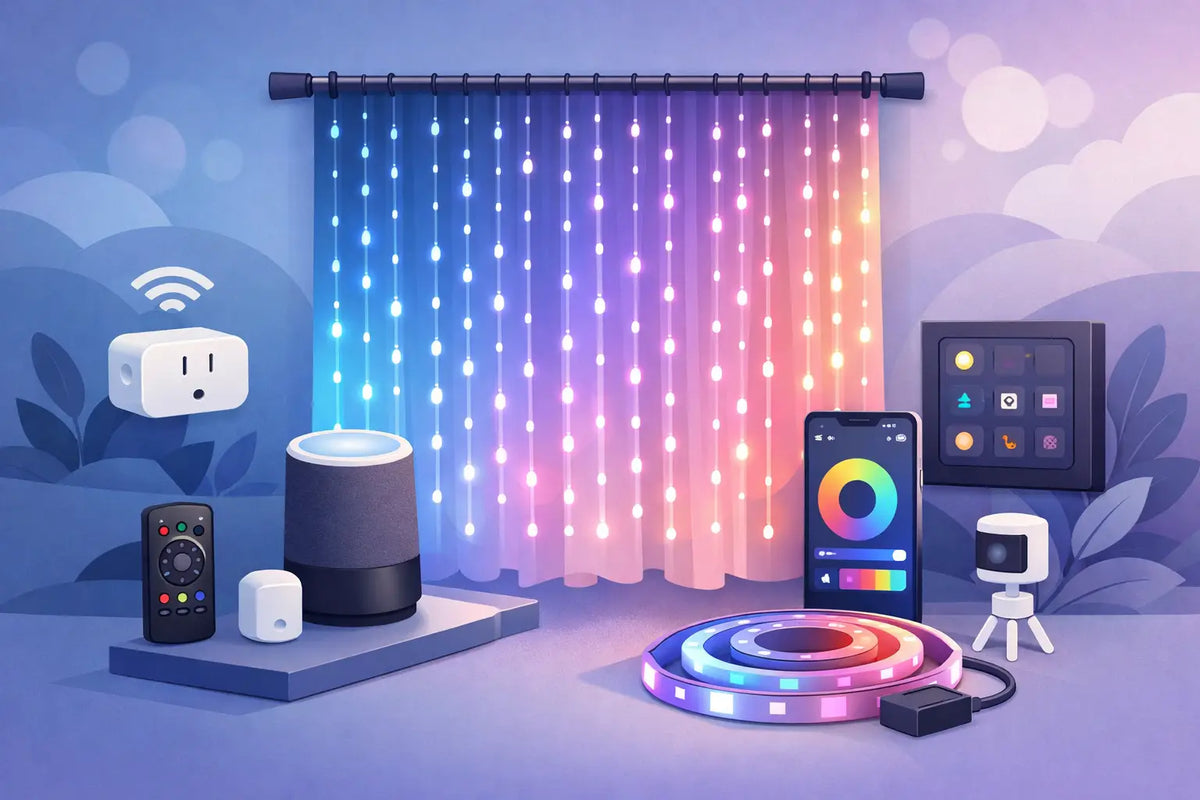
A Govee light curtain can turn a blank wall, porch, gable, or patio into a moving color display. The effect only looks polished, though, when the curtain hangs straight, the controller stays protected, and the wiring does not become the most noticeable part of the installation. That is why the top accessories for Govee light curtains are less about adding decoration and more about making the display secure, clean, and built to stay put.
For a temporary party setup, the hardware included in the box may be enough. For a seasonal display that goes up repeatedly or an outdoor installation exposed to heat, rain, wind, and temperature swings, purpose-built mounting accessories make a real difference. The right parts reduce time on the ladder, protect your lighting investment, and keep every strand where you intended it to be.
Start With Purpose-Built Light Curtain Mounts
The mount is the foundation of the whole installation. Govee light curtains rely on even spacing and straight vertical drops to create crisp patterns, text, and animations. When attachment points shift, sag, or release, the LEDs no longer sit in the layout the effects were designed for. A small alignment issue can be surprisingly visible after dark.
Light Curtain mounts designed for the specific light system are the best first upgrade for homeowners who want a more permanent result. Unlike generic hooks, clips, or improvised fasteners, a purpose-built mount supports the light in the intended position without pinching the wire or forcing it into an awkward bend. It also helps maintain consistent spacing across the top of the curtain.
Choose a mounting approach based on the surface and how long the display will stay installed. Screw-mounted hardware is generally the more dependable option for wood trim, soffits, exterior framing, and other stable surfaces. It takes more commitment than adhesive, but it is the better choice when wind exposure and long-term alignment matter.
Adhesive-backed mounting can make sense on smooth, clean surfaces where drilling is not practical. The trade-off is preparation and weather exposure. Adhesive performance depends heavily on surface cleanliness, temperature during installation, paint condition, and moisture. If the curtain will remain outdoors for months, do not assume adhesive alone will deliver the same holding strength as a mechanically secured mount.
PrintWorks 3D Light Curtain mounts are made for homeowners who want a cleaner fit than a one-size-fits-all clip can provide. Product-specific hardware saves time because you are not testing random hooks on a ladder or trying to make a generic part work around the light’s shape.
The Top Accessories for Govee Light Curtains
Controller and Power Supply Mounts
The controller is easy to overlook until it is hanging from its cable, resting on the ground, or tucked behind a loose piece of trim. That is not a good long-term plan. A dedicated controller mount gives this key component a fixed home, keeps it off wet surfaces, and makes the installation look intentional.
Mount the controller where it remains accessible for troubleshooting, resets, and cable connections. Avoid locations that require removing the entire curtain just to reach a button or connector. Under an eave, inside a weather-protected enclosure, or along a sheltered section of trim can work well, provided you follow the lighting system’s clearance and power requirements.
A power supply mount is equally useful when the adapter would otherwise pull on its connection or sit in a vulnerable spot. Supporting the power supply reduces strain on cables and helps keep the setup organized. It also makes it easier to inspect the system before a holiday display, event, or weekend gathering.
Cable Management Clips and Routing Supports
A great light display loses some of its impact when cords drape across siding, bunch at corners, or hang below the curtain. Cable management clips and routing supports are simple accessories, but they do the work that separates a finished installation from a temporary setup.
Use them to route the lead wire from the curtain to the controller with a clean path. Keep cables close to trim lines or architectural edges when possible. This makes them less visible from the street and less likely to snag during yard work, cleaning, or bad weather.
Do not pull cables tight. Leave enough slack for connectors, service access, and normal expansion or movement. The goal is controlled routing, not tension. A cable that is stretched tight can put unnecessary stress on connections, especially where the line changes direction around a corner.
Corner, Peak, and Offset Mounting Solutions
Not every installation is a simple straight run. Light curtains often look their best beneath roof peaks, across a covered patio opening, or on an exterior wall with trim details that create uneven mounting surfaces. Those areas call for a mounting plan that accounts for the building, not just the lights.
Corner and offset mounting solutions help keep the top edge level when trim depths change or when you need to move the curtain slightly away from a surface. This is especially useful around downspouts, decorative molding, siding transitions, or soffit features. The goal is to preserve the curtain’s grid rather than forcing it to follow every bump and recess in the structure.
Before ordering accessories, measure the full run and identify obstructions. Check where the power lead will begin, where the controller can live, and whether the curtain needs clearance from doors, windows, or moving shutters. Five minutes of planning on the ground can prevent multiple trips up the ladder.
Weather-Resistant Fasteners
The mounts themselves matter, but so do the fasteners holding them in place. Outdoor hardware should resist corrosion and remain secure through changing weather. Cheap fasteners can rust, stain trim, or become difficult to remove when you need to service the installation.
Match the fastener to the mounting surface. Wood trim, vinyl, aluminum soffit, masonry, and composite materials all behave differently. If you are unsure what sits behind the surface, start with a small test location rather than committing to the most visible part of the house.
For a permanent exterior setup, use fasteners that are appropriate for outdoor use and avoid overtightening. A mount should sit firmly against the surface, but excessive pressure can crack plastic parts, deform trim, or make later adjustments harder than they need to be.
Build Around the Viewing Angle
Govee light curtains are visual products, so install them from the audience’s perspective as well as the installer’s. Step back to the curb, driveway, patio, or main seating area before finalizing the mounting points. A curtain that appears level from a ladder may look off-center from where guests actually see it.
Check the top line first. If the upper mounting line is straight and secure, the hanging strands are much easier to manage. Then confirm that the bottom of the curtain has enough clearance from landscaping, furniture, railings, and foot traffic. Outdoor displays should not become something people brush against every time they walk through the space.
If you are installing multiple curtains, leave yourself a consistent reference line. Matching top heights and spacing creates a much stronger finished effect than trying to correct each section by eye. The animation will read as one intentional display instead of several separate pieces.
Avoid the Common “It Will Probably Hold” Mistakes
The most frustrating failures usually come from rushing the support system. One common mistake is relying on a single attachment point for a section that needs several. Another is letting the power or controller cable carry weight that should be supported by a mount. Neither issue may be obvious on installation day, but both can lead to sagging, misalignment, or a disconnect later.
Avoid mounting onto dirty, chalky, wet, or failing paint if adhesive is part of your plan. Also avoid routing wires where they can be pinched by doors, damaged by sharp metal edges, or exposed to constant movement. A few extra clips and a better route cost less than replacing a damaged section of lighting.
Finally, do not hide the controller so thoroughly that it becomes impossible to access. Smart lighting should be easy to enjoy, but it also needs occasional checking, especially after storms or before a major event. Accessible hardware makes that routine maintenance quick instead of annoying.
A light curtain is meant to be the part people notice. Give it mounts that hold alignment, supports that protect the controller and power supply, and cable management that keeps the installation out of sight. Then, when the colors come on, the house gets the attention - not the hardware holding it together.
Share:
Outdoor Lighting Mount Material Guide for Lasting Installs
Govee Soffit Spacing Guide for Clean Results