
A permanent outdoor lighting installation is only as permanent as the mount holding each light in place. A light can be bright, smart, and fully customized, but it will not look finished if mounts sag, crack, discolor, or lose their grip after one hard season. This outdoor lighting mount material guide focuses on the part that is easy to overlook until it fails: choosing a mounting material that can handle real exterior conditions.
For Govee permanent lights, the goal is not simply to get the lights attached. The goal is a clean, consistent layout that stays aligned through summer heat, winter cold, driving rain, and repeated color changes that make every crooked light more noticeable. The right material helps make that possible.
Why Mount Material Matters Outdoors
Exterior trim sees far more abuse than most indoor mounting surfaces. A mount near a soffit or roofline may face direct UV exposure for hours each day. It can heat up well above the surrounding air temperature, then cool rapidly overnight. Rain, humidity, wind vibration, ice, and debris add to the load.
That cycle matters because materials do not all react the same way. Some plastics become brittle in sunlight. Some soften when exposed to high heat. Some metals resist weather well but can bend, corrode, or create a less forgiving fit around a purpose-built light housing. Adhesive-only solutions may look quick at first, but their performance depends heavily on surface preparation, trim texture, temperature, and moisture.
A properly selected mount should do three jobs at once: hold the light securely, keep its beam pointed where you want it, and blend into the installation without becoming the thing people notice. Material is a major part of all three.
Outdoor Lighting Mount Material Guide: Your Main Options
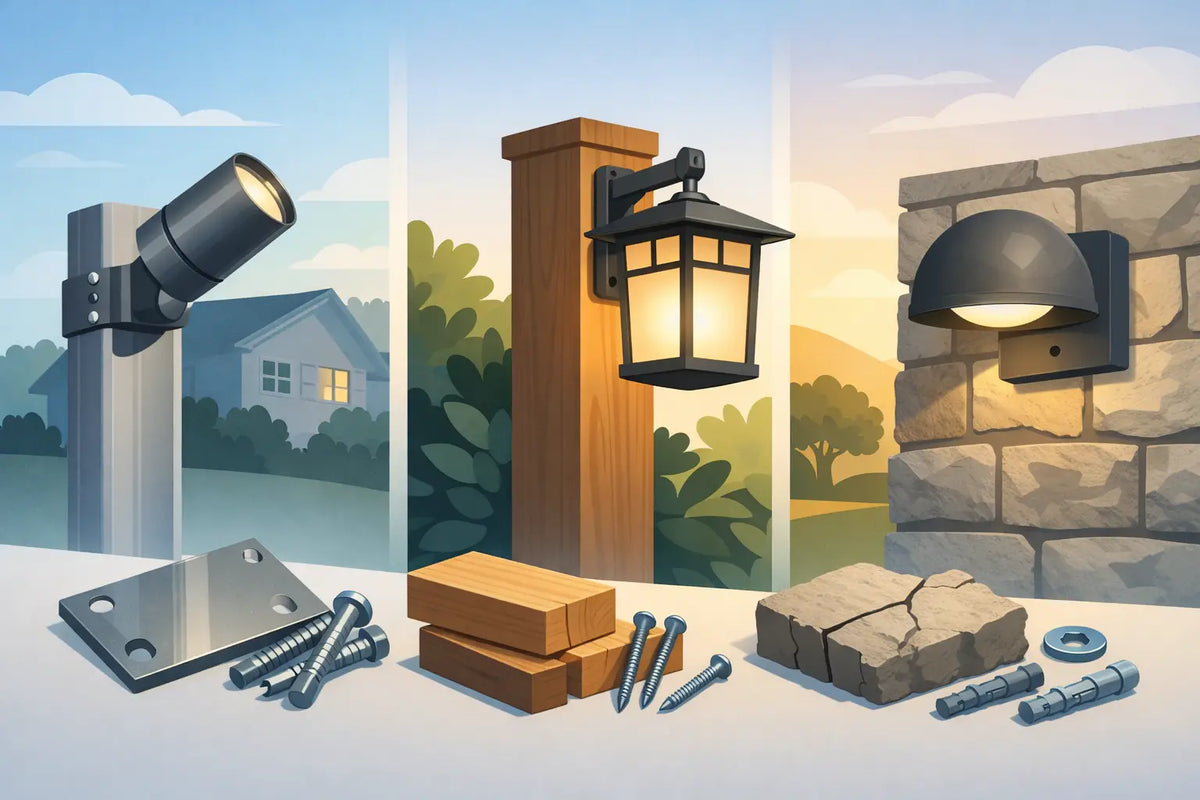
UV-resistant 3D-printed plastics
For custom-fit Govee mounts, weather-resistant engineering plastics are often the most practical choice. They can be designed around the exact body shape, wire path, angle, and mounting position of a specific lighting system. That precision matters on soffits, fascia boards, peaks, gables, and other areas where a generic clip leaves too much room for movement.
Not all 3D-printed plastics belong outdoors, however. Standard PLA is easy to print and works well for many indoor projects, but it is generally a poor fit for exposed rooflines. Heat and long-term sun exposure can cause it to deform, fade, or become brittle. A mount that looks fine in the garage may not hold up on a south-facing eave.
Outdoor-capable materials such as PETG, ASA, and similar UV-conscious formulations are better suited to weather exposure. PETG offers useful toughness and moisture resistance. ASA is especially valued for UV stability and color retention. The ideal choice depends on the mount design, local climate, and how much direct sun the installation receives.
The advantage of a purpose-built printed mount is not just the material itself. It is the fit. A well-designed mount can support the light body in the right position, manage the cable cleanly, and give the screw a secure attachment point without forcing the factory light housing to do work it was not designed to do.
Powder-coated or painted metal
Metal mounts can be a strong choice for heavy fixtures or highly exposed areas, particularly when a mounting solution needs more structural stiffness than plastic can provide. Aluminum resists rust and stays relatively light. Steel can be very strong, but it needs a dependable protective finish to avoid corrosion.
The trade-off is that metal is not naturally custom-shaped around every Govee light. A flat metal bracket may hold a fixture in place, but it may not control spacing, light angle, or wire routing as neatly as a product-specific mount. Sharp edges and contact points also need attention so they do not pinch cables or rub against the light housing over time.
Metal is often the right answer for unusually heavy hardware, but it is not automatically the best answer for every permanent light. For compact LED puck-style lights, a properly engineered weather-resistant plastic mount can provide a cleaner, more tailored installation.
Vinyl, PVC, and trim-compatible materials
Many homes use vinyl soffit, vinyl siding, PVC trim, or composite exterior materials. These surfaces create a separate question: not only what should the mount be made from, but how should it be attached?
A mount needs to be compatible with the surface behind it. Screwing into thin vinyl alone can lead to flexing or loosening. On some installations, a longer fastener that reaches solid backing is the better approach. On others, mounting beneath an eave into wood trim or a fascia board provides a stronger hold and a more concealed result.
The mount material should also move reasonably well with the surface around it. Exterior materials expand and contract with temperature. A rigid installation with no tolerance for that movement can put unnecessary stress on the mount, fastener, or light cable.
Adhesive-backed mounts
Adhesive can be useful, but it should be treated as a surface-dependent mounting method, not a universal replacement for mechanical fastening. Clean, smooth, dry surfaces give adhesive the best chance. Dusty soffits, textured paint, chalking aluminum, humid conditions, and cold-weather installation can all reduce holding power.
For a temporary layout check or a low-stress indoor application, adhesive may be enough. For a permanent outdoor roofline installation, a mount designed for screws or another secure mechanical fastener gives greater confidence. It is especially valuable in locations that see wind, intense heat, or frequent temperature swings.
Match the Material to the Installation Location
There is no single best material for every home because exposure changes from one side of the house to another. A shaded porch ceiling in a mild climate asks less of a mount than a second-story gable that faces afternoon sun and catches winter wind.
Start by looking at sun exposure. If a section of trim gets direct sunlight for most of the day, prioritize UV stability and heat resistance. Dark-colored mounts can also run hotter in the sun, so material quality matters even more in those locations.
Next, consider moisture. Covered soffits are protected from direct rain but can still experience humidity and condensation. Open eaves, pergolas, fences, and patio structures may be hit by rain and wind from multiple directions. Choose corrosion-resistant fasteners along with weather-resistant mounts. A quality mount cannot compensate for a fastener that rusts, stains the trim, or backs out.
Finally, think about access. The hardest-to-reach sections of a roofline deserve the most durable solution you can reasonably install. Replacing one failed clip above a second-story peak is not a small maintenance task. Spending a little more time on a secure mount during the initial install is usually the easier option.
Fit Is a Material Performance Issue, Too
It is tempting to compare mount materials only by strength. But a mount with excellent material properties can still underperform if it does not fit the light correctly.
A loose clip allows the light to rotate. A mount that spaces the light inconsistently creates uneven light patterns across the soffit. A design that leaves the cable unsupported can put strain on the connector. These are installation problems, but they become durability problems over time.
This is why product-specific mounting accessories matter. PrintWorks 3D designs mounts around the real installation challenges Govee owners face: keeping lights straight, handling corners and peaks, supporting cables, and creating a finished look without relying on factory adhesive alone. A mount that fits the light and the surface correctly reduces the stress that causes premature failure.
What to Look for Before You Buy
When comparing outdoor light mounts, look beyond a simple claim that a product is weather resistant. Ask what kind of exposure the mount is designed to handle and how it attaches. Consider whether the design supports your specific Govee model, whether it preserves consistent light placement, and whether it provides a sensible route for the cable.
Pay attention to the fastener location as well. A good mount gives you room to install a screw without fighting the light body or working at an awkward angle on a ladder. It should hold firmly without overtightening, which can crack trim, distort plastic, or create a stress point in the mount.
Color matters, too. Black mounts often disappear against dark soffits and trim, while white mounts can look cleaner against white eaves. The best choice is usually the one that supports a polished appearance without asking the mount material to do more than it should.
A permanent lighting system deserves more than a temporary clip. Choose a mount material that fits your climate, your exterior surface, and your specific lights, then install it with the same care you put into planning the display. The result is lighting that stays where you placed it and looks intentional long after the first night you turn it on.
Share:
Top Permanent Light Controller Mounts for Clean Installs
Top Accessories for Govee Light Curtains