

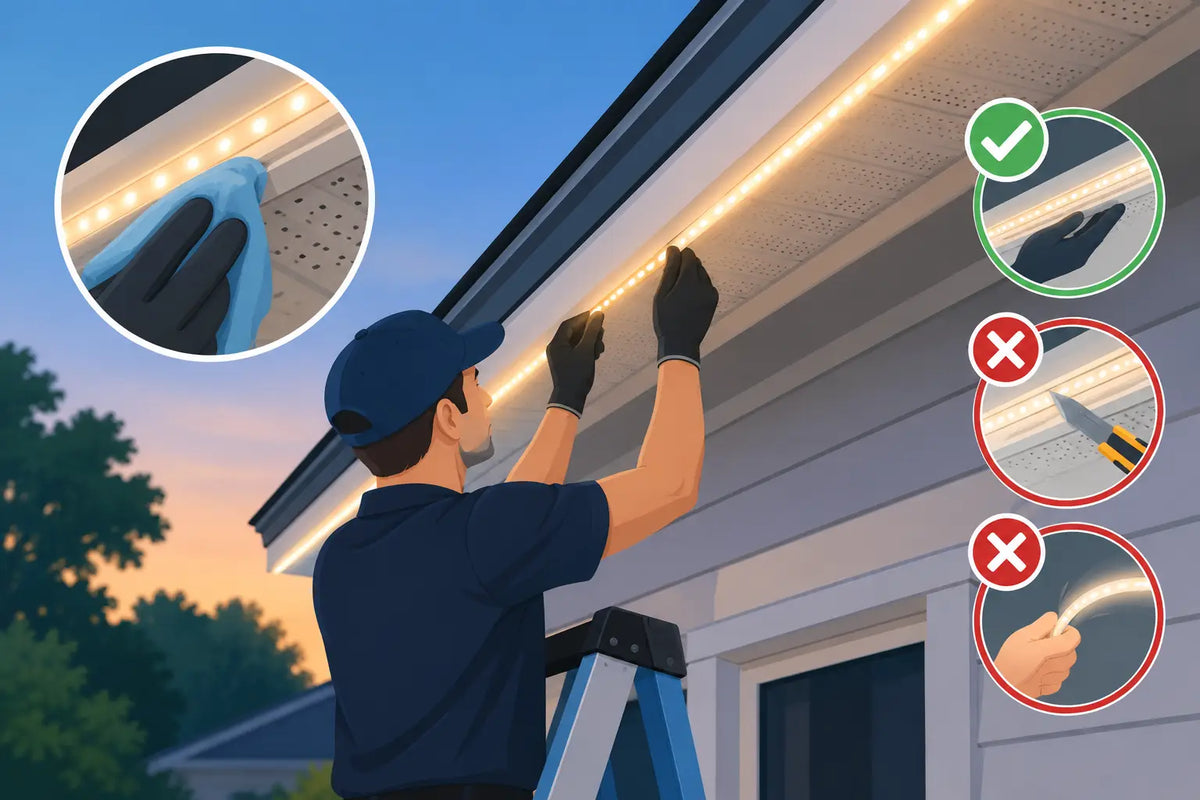
A permanent lighting installation should make your home look sharper, not leave you with cracked vinyl, loose trim, exposed wire, or a row of lights that starts sagging after one hot summer. Govee soffit damage is rarely caused by the lights themselves. It usually comes down to rushed mounting, relying on adhesive where mechanical support is needed, or using a one-size-fits-all clip that does not match the material under your eaves.
The good news is that most of that damage is preventable. A careful plan, the right mounting approach, and a little patience on the ladder can protect your soffit while giving your Govee permanent outdoor lights the clean, even finish they were meant to have.
What Causes Govee Soffit Damage?
Soffits are not all built the same. Your home may have vinyl panels, aluminum soffit, painted wood, fiber-cement boards, or a combination of trim materials. Each reacts differently to heat, cold, moisture, drilling, and pressure from a mounted light string.
The most common issue is adhesive failure. Factory adhesive pads can be useful for positioning lights, but they are not always enough to carry the long-term load of a cable and light run exposed to wind, temperature swings, dust, and humidity. When a pad lets go, the light can hang from the wire, pull against the next adhesive point, and create a chain reaction of loose sections.
Overdriving screws is another frequent problem. A screw that is too long can penetrate farther than intended. A screw driven too tight can distort thin vinyl or aluminum, crack brittle material, or leave a noticeable dimple around the mount. The goal is secure contact, not maximum pressure.
Cable routing can also create damage over time. A wire stretched tightly around a corner, pinched behind trim, or pulled across a sharp metal edge may eventually wear through its jacket. That is both an appearance issue and a reason to stop and correct the installation before powering the system.
Start With a Soffit Inspection
Before opening the first mount, inspect the entire lighting path in daylight. Look for already-loose panels, water stains, cracked caulk, peeling paint, insect damage, or soft wood. Permanent lights should not be used to hide exterior problems. They will make future repairs harder and can place stress on material that is already failing.
Check how the soffit panels are supported. Vinyl and aluminum panels often sit in channels and may flex slightly. That does not mean they cannot be mounted to, but it does mean placement matters. Avoid fastening too close to panel edges, seams, vents, or the J-channel where material needs room to move with changing temperatures.
If you are mounting under wood or fiber cement, identify where you have solid, stable fastening material. A mount that lands on sound trim is generally more dependable than one installed in thin, unsupported material. For homes with unusual eaves, deep overhangs, or angled fascia details, test-fit a small section before committing to the full run.
Use Adhesive for Placement, Not as Your Whole Plan
Adhesive-backed light modules have a place in installation. They can help hold a light in its exact position while you check spacing, alignment, and direction. On a clean, dry, smooth surface, they may provide useful initial grip.
But permanent outdoor lighting needs a backup plan. Exterior heat can soften adhesive. Cold weather can make surfaces less forgiving. Pollen, oxidation, and barely visible dust can keep a pad from bonding as intended. Even a strong initial hold does not guarantee years of reliable service.
Mechanical mounts distribute the load more predictably and keep each light positioned where you installed it. A purpose-built mount also helps prevent the rotation and droop that can make a straight roofline look uneven at night. This matters most on long runs, peaks, and areas that see direct afternoon sun or frequent wind.
PrintWorks 3D mounting accessories are designed around specific Govee light styles, giving homeowners a more secure, retrofit-friendly way to support lights without depending on adhesive alone.
Choose the Right Fastener Length
A mount can be excellent and still perform poorly if the fastener is wrong. Shorter screws are often the safer choice for thin soffit materials because they reduce the chance of penetrating hidden surfaces or creating an unwanted exit point above the eave.
The correct length depends on your soffit material, the mount thickness, and what sits behind the panel. There is no single screw size that fits every house. Before installing dozens of mounts, make one discreet test installation where you can confirm the screw bites securely without deforming the surface.
Use a drill or driver with control. Stop once the mount is seated firmly against the soffit. If the panel begins to bow, wrinkle, or compress, back the screw out and reassess. Tightening harder is not the fix.
For thin aluminum or vinyl, predrilling a small pilot hole can help keep the material from wandering, splitting, or distorting. It takes extra time, but it is much faster than replacing a damaged soffit panel later.
Keep the Cable Supported and Relaxed
A clean installation is not just about getting every light in a straight line. It is also about managing the cable between lights, extensions, and controller connections so nothing is under constant tension.
Leave a small amount of natural slack where cable changes direction. Do not pull wire taut across corners or force it into narrow gaps. If a run needs to cross a seam, use appropriate support so the cable is not relying on the light module or adhesive pad to hold its weight.
Pay special attention near peaks and gables. These areas often require changes in direction and may put more strain on the first and last light in a section. Support the cable before and after the turn, then step back and confirm the lights remain evenly spaced and pointed consistently.
Avoid placing cable where gutters, ladder contact, opening doors, or seasonal decorations can rub against it. A route that looks fine on installation day may become a problem when leaves collect in the gutter or holiday hardware goes up later in the year.
Avoid These Common Installation Shortcuts
The fastest-looking installation method is not always the fastest once repairs are factored in. Skip mounting directly through a light housing unless the accessory is designed for that purpose. Avoid using construction adhesive, hot glue, or random hardware-store clips that can trap moisture, crack in the sun, or fail to hold the correct light angle.
Do not install over dirty surfaces. Wash away grime, pollen, and chalky oxidation, then allow the area to dry fully. Also avoid mounting in rain, on wet material, or during conditions that make working from a ladder unsafe.
Finally, resist the urge to correct a crooked run by pulling on the wire. Remove and reposition the affected mount instead. A few minutes spent fixing alignment early protects both the cable and the finished appearance.
How to Repair Minor Soffit Damage
If you notice a loose mount, a small unused hole, or a panel beginning to flex, address it before the damage grows. Remove the tension from the cable first. Then inspect the fastener location and determine whether the mount needs to shift to a stronger section of material.
Small holes in painted wood can often be filled and touched up. Vinyl and aluminum require more care because patching may remain visible and some panels are best replaced rather than repaired. If the soffit is cracked, badly bent, or showing signs of water intrusion, pause the lighting project and repair the exterior material first.
For wiring that has been pinched, abraded, or visibly damaged, do not cover it with tape and hope for the best. Replace or properly address the affected component according to the lighting system's instructions. Outdoor electrical connections deserve the same attention as the mounts holding the lights in place.
A Better Standard for Permanent Lights
The right installation should look intentional from the street and remain secure when nobody is looking at it. That means lights that stay aligned, cable that stays supported, and a soffit that is not carrying stress it was never designed to handle.
Take the time to inspect, test, and mount each section with the material beneath it in mind. Your exterior lighting can be permanent without making permanent mistakes to the home underneath it.
Share:
Govee Peak Mounts for Clean Roofline Lighting
Your Guide to Weatherproof Light Hardware