

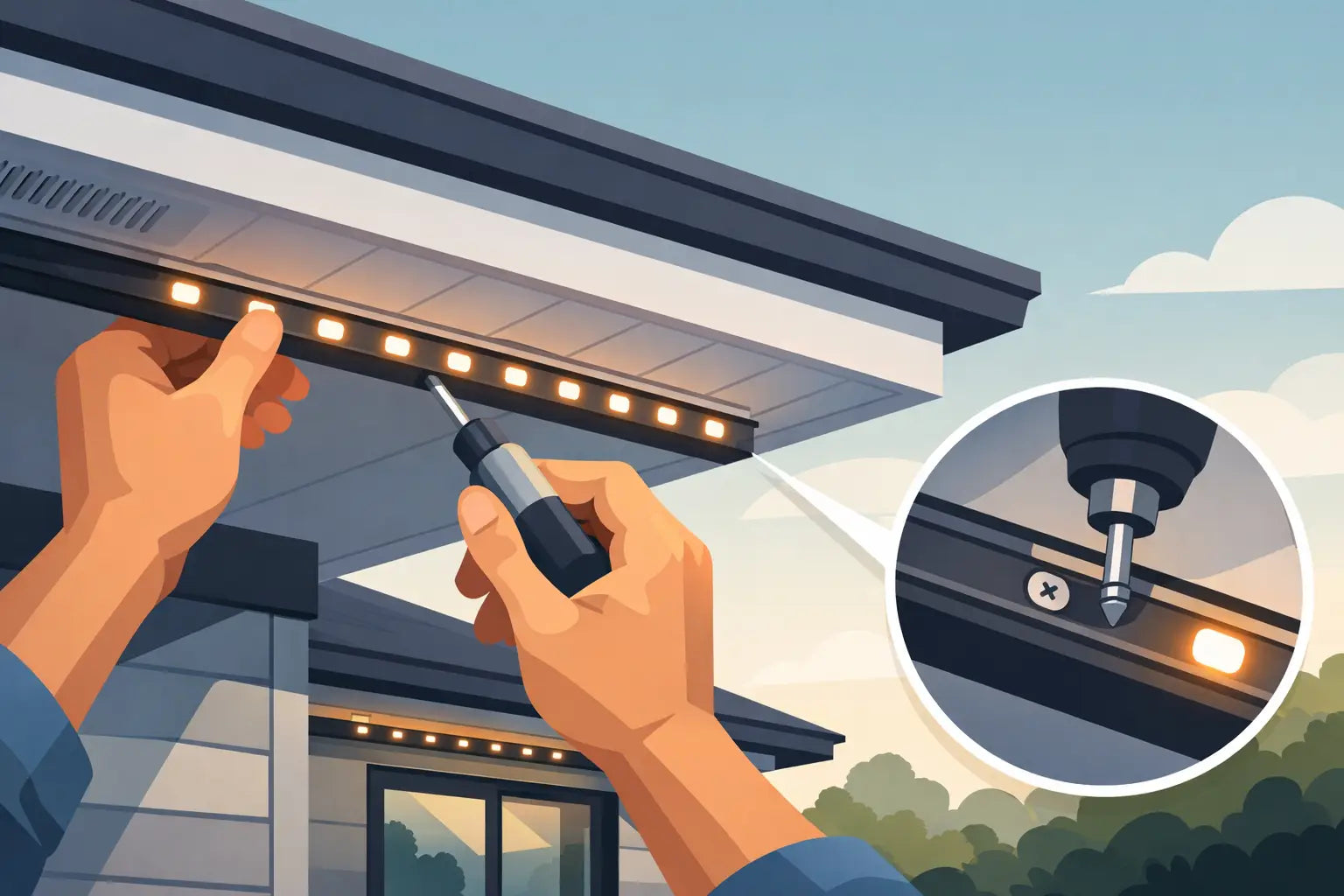
A soffit lighting install can look finished on day one and start sagging, shifting, or separating after the first season of heat, rain, and wind. Knowing how to secure soffit LED tracks correctly is what separates a clean permanent-light installation from one that needs constant attention from a ladder. The goal is simple: keep every run straight, protect the wiring, and use mounting methods that hold up through real exterior conditions.
For Govee permanent outdoor lights and similar systems, the right approach depends on the soffit material, the track style, and whether you are mounting individual light pucks or a continuous channel. Adhesive may help with placement, but it should not carry the full load of an outdoor installation.
Start With a Solid Mounting Plan
Before drilling a hole or peeling backing tape, walk the entire roofline from the ground. Look for seams, vents, porch transitions, corners, downspouts, and areas where the soffit changes depth. These details affect where tracks can sit flat and where you may need a purpose-built mount, spacer, or cable-management solution.
Measure each run and dry-fit the tracks before permanently attaching anything. A track that is slightly too long can bow in the middle. One that ends too short can leave an awkward gap near a corner. When possible, plan track joints at natural breaks in the architecture, such as a corner, beam, or transition between elevations.
Also confirm the intended light direction before mounting. Permanent outdoor lights are typically installed a set distance from the wall so the light creates an even cone or scallop effect. If the track pushes fixtures too close to the wall or lets them hang unevenly, the finished lighting pattern will show it every night.
Choose Fasteners for Your Soffit Material
The soffit surface determines how you should secure LED tracks. Do not assume one fastener works everywhere. Vinyl, aluminum, fiber cement, wood, and composite soffits all behave differently under load and temperature changes.
Wood and Composite Soffits
Wood and composite soffits usually offer the most secure fastening option. Use exterior-rated screws that are long enough to grip solid material without penetrating where they should not. Pre-drilling small pilot holes can prevent splitting and makes it easier to keep the track aligned.
For lightweight tracks, small pan-head or washer-head screws are often the cleanest choice. The head should hold the track securely without crushing or deforming it. Avoid overtightening. A compressed plastic channel can distort, creating a visible wave along the run or making it harder to seat the lights properly.
Vinyl and Aluminum Soffits
Vinyl and aluminum panels require more care because the visible surface may not provide enough holding strength by itself. Whenever possible, fasten into a structural backing point, such as a wood furring strip, framing member, or solid trim behind the panel. If that is not available, use a mounting accessory designed to distribute the load rather than relying on a small screw hole in thin material.
Vinyl also expands and contracts with temperature swings. Leave the track secure but not pinched so tightly that the panel cannot move naturally. A mount that allows a controlled fit is often a better choice than forcing a rigid channel directly against the soffit.
Fiber Cement Soffits
Fiber cement is durable, but it can crack if fasteners are installed carelessly. Pre-drill with the correct bit, keep holes away from exposed edges, and use corrosion-resistant hardware. If you are unsure what is behind the panel, avoid long screws that could contact hidden electrical components or other building systems.
Use Adhesive as Support, Not the Main Attachment
Factory adhesive strips are useful for positioning light strands and holding components while you install mechanical fasteners. They are not a dependable long-term solution for tracks exposed to sun, moisture, dust, and repeated temperature changes.
Even strong outdoor adhesive can fail when the surface is chalky, textured, damp, or contaminated with oxidation. It can also soften in direct summer heat. If you use adhesive during installation, clean the soffit first with a manufacturer-safe cleaner, let it dry completely, and press each section firmly into place. Then reinforce the run with screws, clips, or purpose-fit mounts.
This combination gives you better alignment during installation and a much stronger finished result. It also prevents the common problem of a light run slowly peeling away from one end.
How to Secure Soffit LED Tracks in Straight Runs
Long, straight sections are where small alignment mistakes become obvious. Establish a reference line before attaching the first track. A chalk line, laser level, or a carefully stretched string can work, depending on the surface and your comfort level.
Install one end of the first section, check the line, then secure the opposite end before adding center fasteners. This prevents the track from wandering as you work. For longer channels, add fasteners at regular intervals based on the track material and weight. The goal is to eliminate sagging between attachment points without adding unnecessary holes.
Keep every track joint flush. If one section sits even slightly lower than the next, it can create a visible break in the lighting pattern and put extra stress on the wiring. Trim only with the correct tool for the channel material, then smooth sharp edges so they cannot rub through cable insulation.
If you are mounting Govee light pucks in individual locations rather than placing a full channel across the soffit, consistent spacing matters just as much. Use a measuring block or template so every mount sits at the same distance from the wall and from the next light. PrintWorks 3D mounts are designed for this kind of repeatable placement, helping create a cleaner pattern while giving each light a more secure mechanical hold than adhesive alone.
Account for Corners, Peaks, and Transitions
Corners are the first place many installs start to look improvised. Do not force a straight track to bend sharply around an outside corner unless the track is specifically designed to flex. Rigid channels can crack, pull away from the soffit, or place pressure on the cable.
Instead, end one track cleanly and begin the next section on the adjoining plane. A small, intentional gap is better than a warped channel. For peaks and gables, work from the center outward if the layout is symmetrical. That keeps the light pattern balanced and avoids ending with a narrow, uneven piece at one side.
Where the wire needs to cross a gap, support it instead of letting it hang. Use weather-resistant cable clips or mounts sized for the cable diameter. Avoid tight zip ties that pinch the wire, especially around corners. The cable should be held securely while retaining a gentle bend radius.
Keep Water and Weather in Mind
Outdoor lighting hardware needs more than a good initial fit. It needs to perform after rain, freeze-thaw cycles, wind vibration, and years of heat. Choose screws and clips that resist corrosion. Stainless steel or properly coated exterior fasteners are generally a safer choice than basic interior hardware.
Mount tracks so they do not trap water against the soffit. This is especially relevant for channels with deep sidewalls or closed ends. If a track design can collect water or debris, leave appropriate drainage space or use an accessory intended for exterior exposure.
Check every connection point before finalizing the installation. Connector housings, extensions, and controller cables should be supported independently from the light track. A track is meant to hold the lighting component, not carry the weight of a dangling extension cable. Supporting those runs reduces strain on plugs and helps prevent intermittent issues later.
Test Before You Commit to the Entire Roofline
Install and power a short section before securing every track across the house. Turn the lights on after dark and look for uneven spacing, visible channel edges, crooked pucks, or light cones that are too close to the siding. It is much easier to adjust five mounts than fifty.
Once the pattern looks right, continue in manageable sections. Keep hardware, tracks, and cables organized so you are not making mounting decisions while balancing on a ladder. If a location feels difficult to access safely, stop and rethink the order of operations. A permanent installation should be deliberate, not rushed.
The best soffit LED track installation is one you barely notice in daylight and trust completely after dark. Secure the system to the right surface, support its wiring, and give every light a consistent position. That extra care is what keeps your exterior lighting looking intentional long after the installation day is over.
Share:
Outdoor Light Controller Mounting Bracket Guide
Review of Govee Pro Mount Kits: Worth It?