

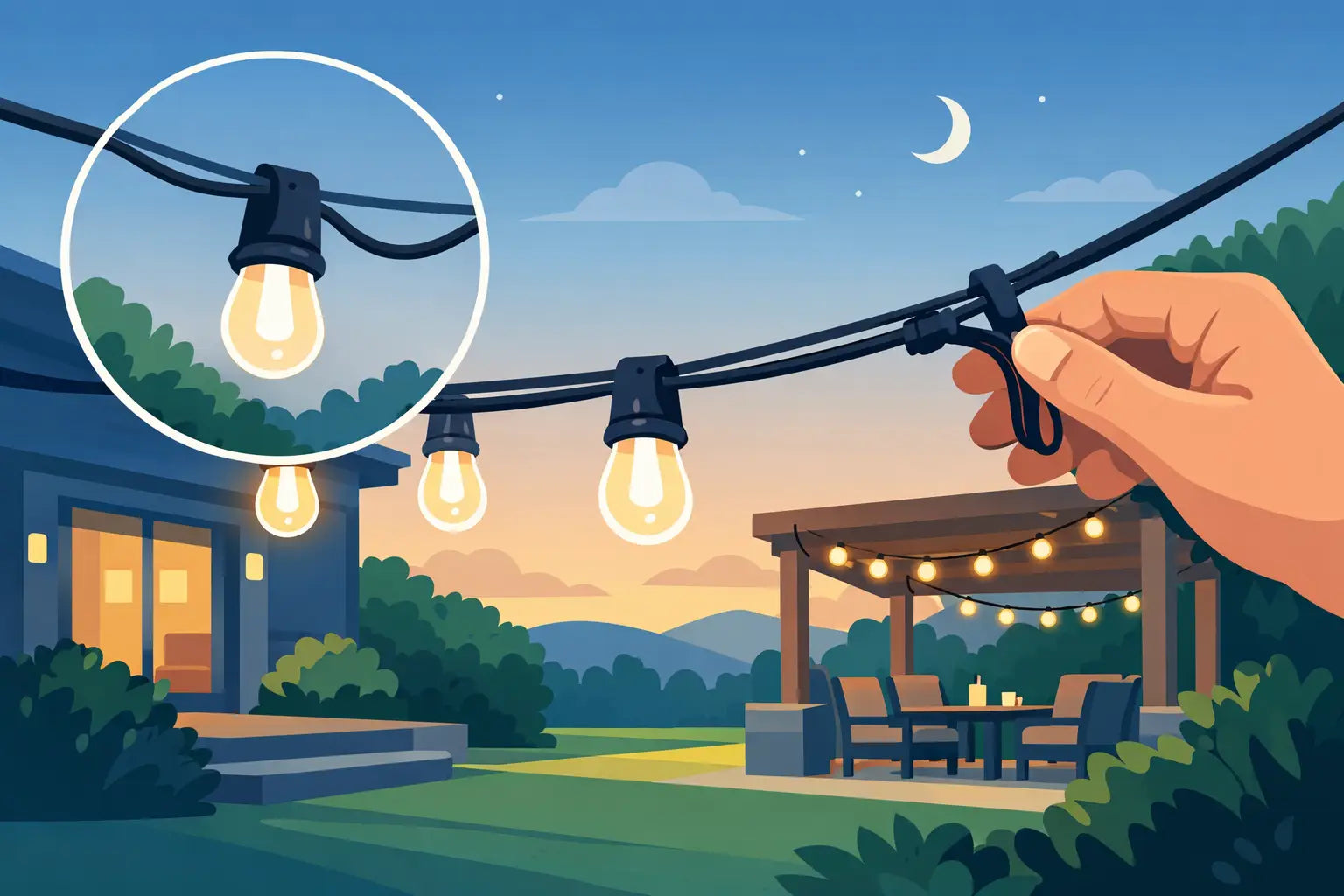
You usually notice outdoor light droop from the street, not from the ladder. One section sags lower than the rest, the beam angle looks uneven, and a clean roofline install starts to look temporary. If you're wondering how to prevent outdoor light droop, the fix is rarely the lights themselves. It usually comes down to mount design, spacing, surface prep, and how much stress the install puts on each attachment point.
For permanent outdoor lighting, droop is more than a cosmetic issue. Once a light starts to shift, it can throw off spacing, reduce aiming consistency, and create more pull on the next mount down the line. Over time, a small sag can turn into a chain reaction, especially on soffits, fascia boards, peaks, and other areas where temperature swings and moisture keep testing the install.
Why outdoor lights start to droop
Most droop problems start with a mismatch between the mounting method and the job site. Stock adhesive pads and light-duty clips can work for short-term setups or perfectly smooth surfaces, but permanent outdoor lighting asks more from every part of the system. Heat, cold, humidity, rain, and direct sun all work against the bond.
Then there is cable weight and tension. Even lightweight smart lighting systems create cumulative pull across a long roofline. If each light or wire segment is not supported well enough, the load gets transferred unevenly. One weak point starts to sag, and the sections around it begin to follow.
Surface condition matters too. Painted wood, textured soffits, dusty aluminum, and older trim can all reduce how well a mount stays put. A method that looks fine on install day may not hold once the surface expands in summer heat or contracts in freezing weather.
How to prevent outdoor light droop from the start
The best way to avoid droop is to treat the install like a permanent exterior project, not a quick stick-and-go job. That means choosing a mounting approach built for your exact light model, your mounting surface, and the line length you're working with.
Start with support at consistent intervals. Long gaps between attachment points increase strain and make the wiring more likely to bow. Even if the lights themselves seem secure, unsupported wire can create downward pull that slowly changes alignment. A cleaner install usually comes from distributing the load across more secure mounting points rather than asking a few clips to do all the work.
Fit also matters more than many homeowners expect. A mount designed specifically for the light body tends to hold position better than a generic clip that only sort of fits. When the mount cradles the unit properly, it reduces wiggle, twisting, and gradual movement caused by vibration or weather exposure.
Choose mounts that match the light and the location
Not every section of a home creates the same installation challenge. Straight soffits are one thing. Peaks, gables, corners, and trim transitions are another. If you use the same mounting strategy everywhere, droop often shows up first in the awkward sections where the angle changes or the wire needs better control.
This is where purpose-built hardware has a real advantage. A mount made for a specific Govee light series can provide better retention, better alignment, and a more consistent finished look. That matters for performance, but it also matters for appearance. Permanent lights should look intentional in daylight, not just impressive at night.
There is also a trade-off to consider. More secure mounts may take a bit more planning up front, but they usually save time later by reducing rework, callbacks to your own ladder, and seasonal fixes. For most homeowners, that is the better deal.
Surface prep is not the exciting part, but it matters
If you skip surface prep, even a good mount can underperform. Dirt, chalking paint, oxidation, pollen, and moisture all interfere with adhesion and seating. Before mounting anything, clean the surface thoroughly and let it dry fully. If you're working under eaves or soffits, inspect for loose paint, cracking caulk, or uneven sections that could keep a mount from sitting flat.
Flat contact is a bigger deal than it sounds. A mount attached to an uneven surface may seem tight at first, but tiny gaps allow movement. Once wind or temperature changes start working on it, the mount can shift just enough to create visible sag.
If your home has older exterior trim or a heavily textured surface, it is worth slowing down and checking whether your preferred mounting method is realistic for that material. Some surfaces simply need a more secure mechanical hold than others.
Watch wire management as closely as the lights
A lot of homeowners focus on the light puck and overlook the wire between fixtures. That is often where droop begins. When wire is left to hang with too much slack, it adds visual sag even if the light bodies stay in place. When it is pulled too tight, it can create tension that slowly drags mounts out of alignment.
The goal is controlled routing. You want enough slack for a clean install that respects corners and spacing, but not so much that the line dips between points. This balance depends on your layout, the architecture of the home, and the specific light system you're installing. Peaks and long horizontal runs usually need extra attention because gravity becomes more obvious there.
Think of the entire run as one system. A clean, durable result comes from supporting both the fixtures and the cable path so that weight is managed evenly.
How to prevent outdoor light droop in problem areas
Some parts of an install are more vulnerable than others. Corners, peaks, lower soffit returns, and any place where the wire changes direction tend to develop stress first. These are the places where homeowners often see the first sign of sagging.
In those spots, standard spacing may not be enough. You may need more frequent support or a mount style better suited to directional changes. This is especially true if the lights need to stay aligned for a precise wash effect on the house. A slight rotation or drop at a peak can be much more visible than the same shift on a straight run.
Temperature exposure can make these sections even harder. South- and west-facing elevations often take more sun, which means more expansion, more adhesive stress, and more long-term movement. If one side of the house gets hit harder by heat and weather, plan for that instead of assuming every side will behave the same way.
Don’t let “good enough” hardware define a permanent install
A common reason installs droop is simple: the included hardware was never designed for the level of permanence homeowners expect. Factory options are often built to serve the widest range of buyers, surfaces, and use cases. That does not mean they are the best choice for a clean, long-term exterior installation.
If you want your lights to stay straight through heat, storms, and seasons of daily use, the mount needs to do more than hold for a week. It needs to maintain fit, resist movement, and keep the light positioned where you put it. That is why many DIY installers move toward purpose-built solutions from brands like PrintWorks 3D when they want a more secure result for Govee systems.
The practical advantage is not just durability. Better-fit mounts can also make installation easier because you're spending less time fighting awkward placement and less time second-guessing whether a section will hold.
A better install usually looks better too
There is a performance side to droop, but there is also a visual one. Permanent outdoor lighting should follow the architecture cleanly. The lights should look evenly spaced, consistently aimed, and intentional from end to end. Once sag enters the picture, the whole install can start to feel uneven, even if only one section has shifted.
That is why prevention matters more than repair. Fixing a drooping section after the fact often means removing lights, cleaning surfaces again, correcting spacing, and replacing hardware that should have been stronger from the beginning. It is far easier to build in stability on day one.
If you are planning a new install, the smartest move is to think beyond basic attachment. Choose mounts that actually fit, support the wire path, respect the problem areas, and match the permanence of the project. When the hardware is doing its job, the lighting system has a much better chance of looking sharp long after the ladder is back in the garage.
A straight roofline is not luck. It is the result of better support, better fit, and fewer compromises where they matter most.
Share:
Weatherproof Govee Power Mount Guide
What Mounts Fit Govee Elite?