

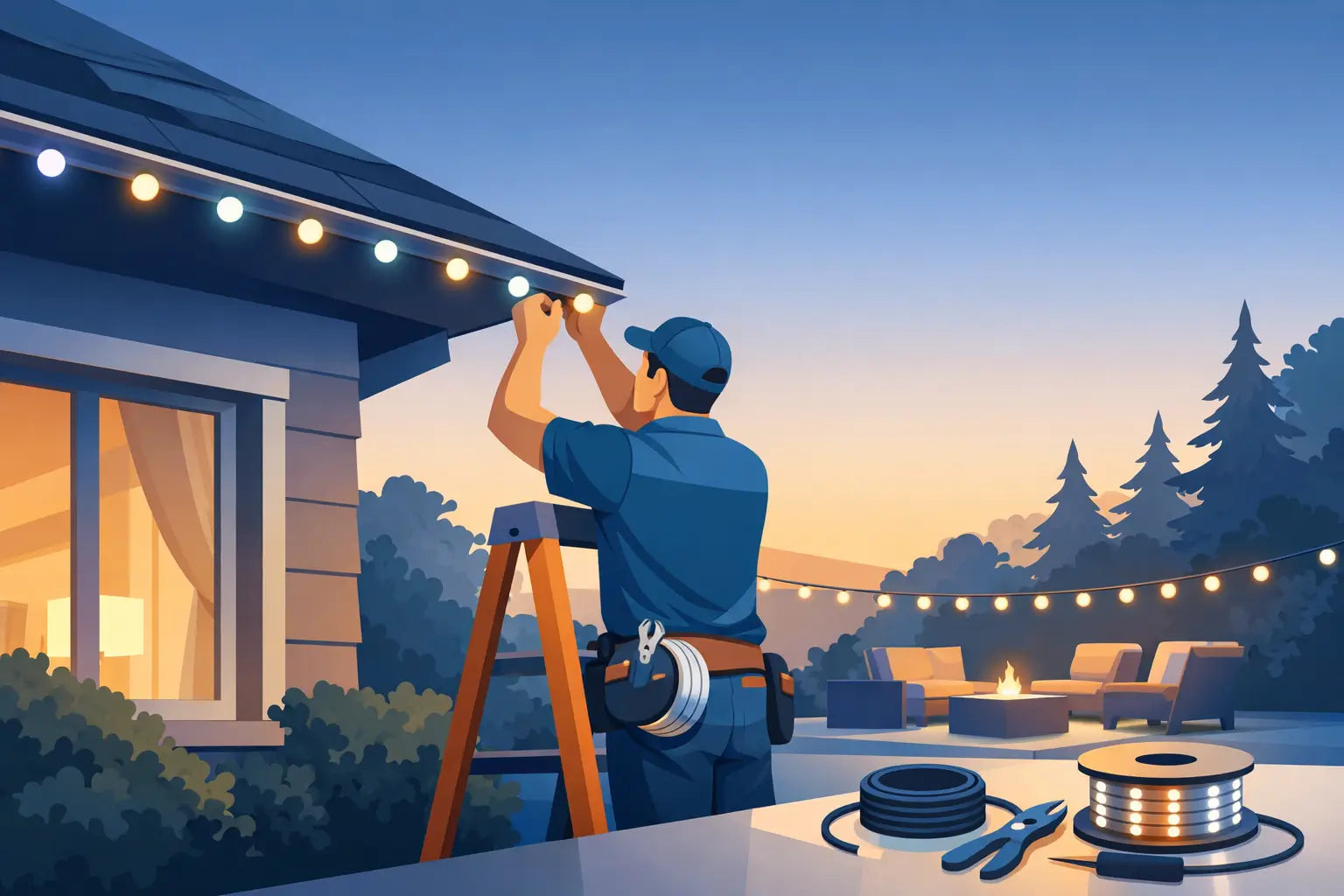
If you have ever stepped back after installing permanent lights and noticed sagging wires, uneven spacing, or sections that already look loose, you know the problem is rarely the lights themselves. Most of the frustration comes from the install. These permanent outdoor LED light installation tips are built for homeowners who want a clean roofline, secure mounting, and a result that still looks good after heat, rain, and winter weather.
Start with the roofline, not the lights
A good install starts before the first clip or screw goes up. Walk the entire roofline and pay attention to fascia shape, soffit depth, drip edge position, outlet access, and any spots where the line changes direction. Peaks, gables, corners, and lower returns are usually where installs start to look uneven.
This is also where many DIY setups go off track. People measure the house width, order lights, and assume the rest will work itself out. In practice, mounting surface matters more than total length. A flat, accessible fascia gives you more flexibility than a narrow edge tucked behind gutters.
Take photos, note transitions, and measure each run separately. If your home has multiple levels, break the project into zones. That helps you plan power placement, controller access, and mounting style without making the install harder than it needs to be.
Permanent outdoor LED light installation tips for layout
Before you mount anything, lay out the full lighting path on paper. Mark straight runs, corners, peaks, and termination points. This gives you a chance to catch bad assumptions early, especially around roof features that interrupt a clean line.
Spacing deserves more attention than most people give it. If lights are too close to architectural edges, the effect can look harsh or crowded. If they sit too far back, the wash may disappear or lose definition. The right placement depends on your home, your lighting model, and the effect you want at night. Test one short section before committing to the whole perimeter.
It also helps to think about visibility from the street. A mount position that looks perfect from a ladder can read very differently from the driveway. Install a sample section, power it on after dark, and check the angle from several viewpoints.
Test fit before final mounting
Dry fitting saves time. Hold a short run in place and confirm that the lights sit consistently, the wire path stays tidy, and the mount orientation keeps each fixture aligned. A few extra minutes here can prevent a lot of rework later.
This matters even more on peaks and corners. Those are the areas where stock mounting methods often struggle to keep lights straight and evenly aimed.
Use mounting hardware built for the job
The fastest way to make a permanent system look temporary is to trust weak or generic mounting options. Outdoor exposure is unforgiving. Adhesive-backed clips can lose grip. Universal holders may not match the light body correctly. Poor fit leads to twisting, drooping, and uneven light output.
For a clean, durable install, the mount should match the specific light system and the actual surface where it will live. That is especially true for Govee permanent lights, where consistency of angle and retention makes a big difference in the final look.
Purpose-built mounts can solve several problems at once. They keep the light seated correctly, improve alignment, and reduce the chance of movement in wind or heat. They also make retrofit work easier if you are replacing factory hardware that did not hold up. PrintWorks 3D focuses on that exact problem with model-specific mounting options designed for permanent outdoor installations.
Screw-mounted vs adhesive installs
If you want the install to last, mechanical fastening usually wins. Adhesive can work in some conditions, but exterior surfaces deal with dust, temperature swings, moisture, and seasonal expansion. That is a lot to ask from glue alone.
Screw-mounted solutions take more effort up front, but they provide better long-term confidence. The trade-off is simple: a slightly slower install now for less maintenance later.
Keep every section straight and consistent
Nothing makes permanent lighting look more professional than consistency. That means equal spacing, even orientation, and smooth transitions from one section to the next. Once one run starts drifting, the whole roofline can look off.
Use a reference line whenever possible. On fascia, that might mean marking a consistent distance from the top or bottom edge. On soffits, it may mean snapping a line or using a measured spacer. Do not rely on eye judgment alone while standing on a ladder.
Corners need their own plan. Some homeowners try to force a straight-run pattern around every turn, but that can create bunching or awkward angles. In many cases, a corner-specific approach looks cleaner and puts less stress on the wire and mounts.
Watch wire management closely
Even if the lights are aligned well, exposed slack can ruin the look. Keep wire runs neat and controlled, especially near ends, controllers, and power transitions. Extra cable should be secured intentionally, not stuffed behind trim and forgotten.
This is one of those details that affects both appearance and durability. Loose wire is more likely to move, rub, or catch wind over time.
Plan around weather, power, and service access
Permanent lighting should be easy to live with after installation day. That means thinking beyond the visible light line. Where will the controller sit? Can you reach it without a ladder? Is the power supply protected from direct exposure? If a section needs troubleshooting later, can you access connections without removing half the run?
A clean install hides the clutter, but it does not bury critical components in impossible spots. Put controllers and power hardware where they stay protected and accessible. If you ever need to reset, update, or replace something, you will be glad you planned for it.
Weather resistance also starts with placement. Avoid trapping hardware where water regularly pools or drains. Mounting under eaves helps, but sheltered does not mean dry. Moisture, UV exposure, and temperature swings still matter, so materials and fastening method should reflect real outdoor conditions.
Work in manageable sections
Large installs go better when you stop treating the house like one continuous job. Break it into logical runs and finish each one fully before moving on. That means measuring, test fitting, mounting, checking alignment, and powering on in stages.
This approach helps you catch mistakes while they are still small. If one section is slightly off, you can correct it before the problem repeats across the entire roofline. It also keeps ladder time more efficient because you are not constantly switching between planning and installation.
For multi-story homes, sectioning is even more important. Higher runs are slower and usually less forgiving. Knock out lower, visible sections first so you can refine your spacing and mount placement before moving to more difficult areas.
Don’t let speed ruin the finish
A permanent system should look intentional in daylight, not just colorful at night. That means caring about the small details: straight runs, clean terminations, tidy wire paths, and mounts that do not look like an afterthought.
Rushing usually shows up in three places. First, inconsistent spacing. Second, poor corner handling. Third, mounting choices that were convenient on install day but do not hold up season after season. If you want a polished result, slow down enough to get those details right.
That does not mean making the project complicated. It means choosing hardware that fits, checking your work as you go, and resisting the urge to call it done when a section is merely acceptable.
When a retrofit makes more sense
Not every homeowner is starting from scratch. A lot of permanent light projects begin with an existing install that never looked quite right. Maybe the stock clips failed. Maybe the alignment was off from day one. Maybe the lights work, but the mounting does not match the word permanent.
In that situation, a retrofit can be the smartest move. If the lights and wiring are still in good shape, upgrading the mounting system may be all it takes to improve appearance and reliability. It is often less expensive and far less frustrating than starting over completely.
This is where product-specific mounts really earn their keep. Better fit means better retention, cleaner angles, and less trial and error on the ladder.
Know what “good” looks like before you finish
The final check should happen in daylight and after dark. During the day, look for visual consistency across the entire roofline. At night, check beam placement, wash pattern, and corner transitions. If one section looks brighter, dimmer, or misdirected, it may be a mounting issue rather than a light issue.
A good permanent install does not call attention to the hardware. It makes the lighting effect look crisp, even, and built into the home. That is the standard worth aiming for.
If you are investing in permanent outdoor lighting, treat the mounting and layout with the same seriousness as the lights themselves. The right prep and the right hardware turn a frustrating weekend project into something that looks finished every time you pull into the driveway.
Share:
Are Govee Permanent Outdoor Lights Worth It? Cost, Benefits & Reviews
How to Mount Govee Outdoor Lights Right