

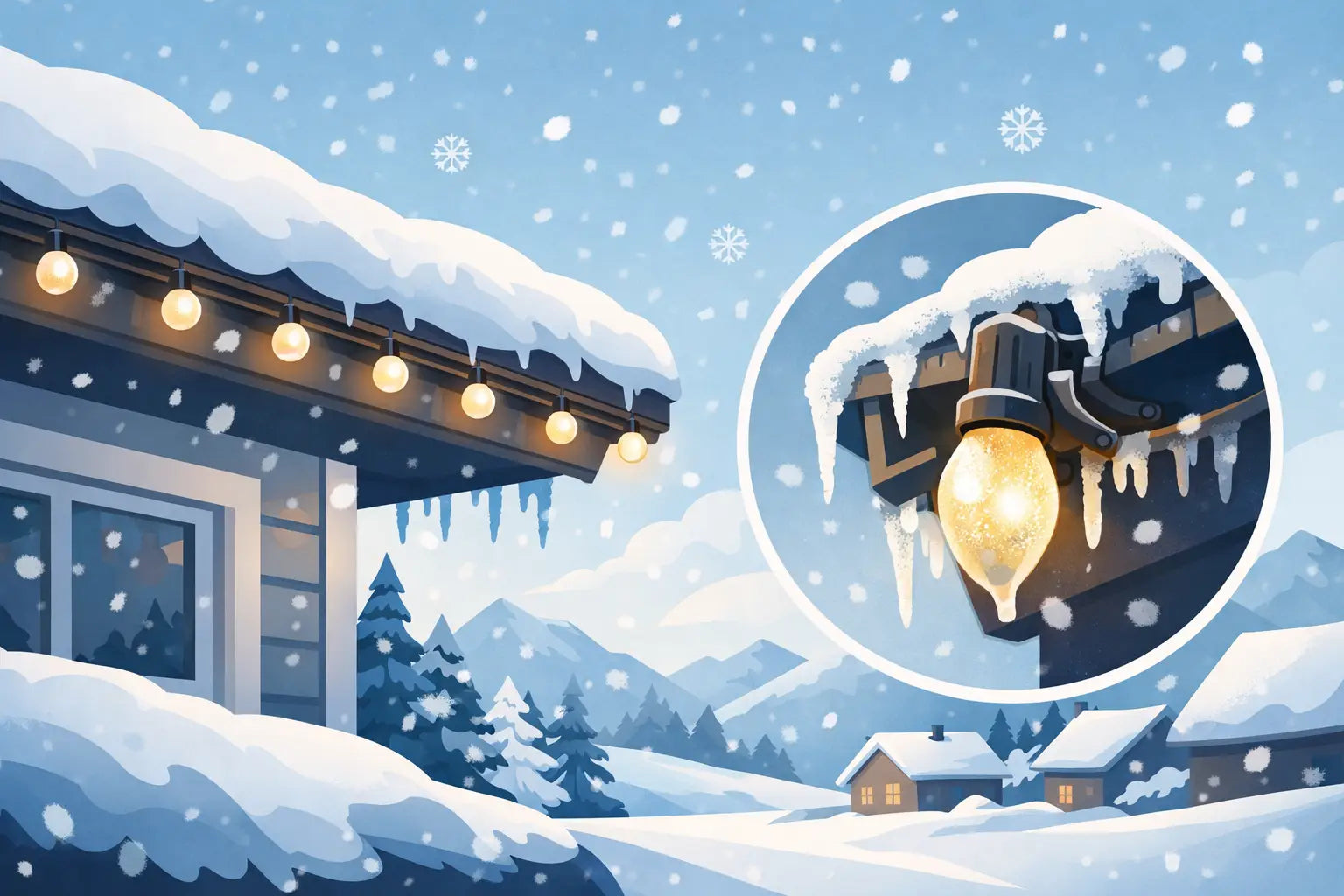
The first hard freeze is when a permanent lighting install proves what it is. A clean roofline can look perfect in October, then start sagging, shifting, or peeling once cold snaps, wind, ice, and snow show up. So, do permanent light mounts survive winter? Yes - but only when the mount design, material, installation method, and mounting surface are all working in your favor.
That answer matters because winter does not fail mounts in just one way. Cold makes some plastics brittle. Freeze-thaw cycles loosen weak adhesive installs. Wind adds constant stress at peaks and corners. Snow and ice introduce extra weight, and water intrusion can turn a small installation mistake into a mid-season problem. If you want permanent lights to actually feel permanent, the mounts have to be built for outdoor conditions, not just made to hold lights on a calm day.
Do permanent light mounts survive winter on every home?
Not automatically. Winter survival depends on a mix of product quality and install quality. A strong mount on a bad surface can still fail. A good-looking install with poor spacing or weak attachment points can still drift out of alignment by January.
This is where many homeowners get frustrated. The lighting system itself may be solid, but the stock mounting approach often leaves too much up to chance. If the mount does not fit the light well, does not sit correctly under the soffit or trim, or relies too heavily on tape alone, winter exposes those weak points fast.
A better way to think about it is this: winter is a stress test. Mounts that are purpose-built for permanent outdoor lights usually do well when they are matched to the right fixture and installed on a sound surface. Generic solutions tend to struggle because they are not engineered around the actual shape, weight, and placement of the lighting system.
What winter actually does to permanent light mounts
Cold weather changes the behavior of both materials and surfaces. Plastic can contract. Adhesives can stiffen and lose grip. Metal trim can expand and contract at a different rate than the mount attached to it. None of that guarantees failure, but it does mean the mount needs enough material strength and proper geometry to stay secure through movement.
Wind is often the bigger issue than snow. A roofline install may look protected, but corners, peaks, and open gables catch gusts constantly. That creates repeated force on each light and mount. Over time, a weak clip or poorly supported adhesive pad can start to pull away.
Moisture is another major factor. Water can get behind a mount or into tiny gaps near the mounting surface. When temperatures drop, that moisture freezes and expands. During the day, it thaws. That freeze-thaw cycle is hard on cheap materials and uneven installs. If a mount already has a slight lift or poor contact point, winter tends to make it worse.
Snow load matters too, but mostly in specific placements. Under soffits and overhangs, lights are often somewhat protected. On exposed trim, fascia edges, or architectural features where snow can pack in, the mounts may have to handle extra downward pull. That is why fit and retention matter just as much as weather resistance.
The material matters more than most people think
Not all 3D-printed or molded mounts perform the same outdoors. This is one of the biggest reasons one homeowner gets several clean winters out of an install while another sees issues in the first season.
A winter-capable mount needs material stability in low temperatures, enough impact resistance to avoid cracking, and enough structural integrity to hold shape over time. If the material is too brittle, a cold morning or a bit of ladder pressure during maintenance can snap it. If it softens too much in summer and then contracts hard in winter, long-term alignment can suffer.
Good outdoor mounts are designed with weather exposure in mind, not treated like a generic plastic accessory. That means the material choice, wall thickness, retention features, and overall shape are doing real work. A mount that grips the fixture properly and spreads load across the mounting point gives you a much better chance of getting through winter without movement.
This is where purpose-built products earn their keep. PrintWorks 3D focuses on mounts designed specifically for Govee light systems, which matters because fit is not a cosmetic detail. A precise fit reduces wobble, keeps light direction consistent, and lowers the chance of stress shifting to one weak point during cold weather.
Installation method can make or break winter performance
Even the best mount can underperform if it is installed on a dirty, chalky, damp, or uneven surface. Winter failures often start with prep problems that were invisible on install day.
If you are mounting under soffits, fascia, or trim, surface condition matters a lot. Dust, oxidation, old paint residue, or leftover grime can reduce holding strength right away. That is especially true if adhesive is part of the installation method. Adhesive-backed installs can work well in the right conditions, but they are more sensitive to temperature, cure time, and surface prep than many people realize.
Mechanical fastening usually gives more confidence for long-term outdoor use, especially in areas with regular freeze-thaw cycles, strong winds, or heavy seasonal weather. That does not mean every install needs screws everywhere. It means you should be honest about your environment. A sheltered soffit in a mild climate is different from an exposed peak in a northern winter.
Spacing matters too. If mounts are too far apart, the wire or light body may create extra leverage during wind events. If placement is inconsistent, the line can start to look uneven as the season goes on. Purpose-designed mount systems help control that by giving each light a stable, repeatable position.
Where winter failures happen first
Most problems do not start in the middle of a straight, protected run. They usually show up at transitions and stress points. Corners, roof peaks, end runs, and sections near downspouts or exposed gables tend to take more abuse.
Those areas deal with shifting wind angles, runoff, and more visible movement. If a mount is going to loosen, these are the first places to watch. That is also why retrofit-friendly, application-specific mounts are so useful. You can reinforce the problem areas without redoing the whole system.
Another common failure point is the surface itself. Older painted wood, oxidized aluminum, and textured trim can all reduce contact quality. Homeowners sometimes blame the mount when the real issue is that the substrate was never a great attachment surface to begin with. A mount can only be as reliable as what it is fastened to.
How to tell if your permanent light mounts are winter-ready
You do not need a lab test. You need a realistic check of design, fit, and installation. If the mount is made for your exact light model, sits securely without play, and is installed on a clean, stable exterior surface, you are already in much better shape.
You should also look at how the install handles stress. Are the lights aligned evenly with no twisting? Are corners and ends properly supported? Is there any section where the wire is pulling on the mount? Are adhesive components installed within temperature guidelines and given enough time to bond? These details are boring right up until the weather turns.
A strong winter-ready setup usually feels solid before winter arrives. Nothing rattles. Nothing shifts when touched lightly. The lights maintain consistent direction and spacing. If a section already looks questionable in mild weather, winter will not improve it.
The trade-off between quick installs and durable installs
Every homeowner wants an easier install, and that is reasonable. Nobody wants to spend more time on a ladder than necessary. But there is a difference between a fast install and a rushed one.
The best mounting solutions save time because they fit correctly, reduce fiddling, and create repeatable placement. They do not save time by asking you to skip prep or pretend weather exposure does not matter. That is an important distinction.
If you live in a region with real winters, durability should win over convenience when the two conflict. A mount that installs quickly and stays put is the goal. A mount that installs quickly but starts drifting by the first freeze is just borrowed time.
Permanent outdoor lighting is supposed to look clean in every season, not only on install day. That is why the mount should be treated as a structural part of the system, not an afterthought.
Winter has a way of revealing whether your setup was engineered or improvised. When your mounts are designed for the specific lights you use, made from weather-resistant material, and installed with care on the right surface, they can absolutely survive the season. If you are planning a permanent install, build it so January looks as good as day one.
Share:
Guide to Clean Roofline Light Layouts
Best Mounts for Angled Rooflines