
Anyone who has stood on a ladder trying to keep a Govee light straight while backing tape starts peeling knows this fast: the real install problem is not the light. It is the mounting method. When people compare 3d printed mounts vs adhesive strips, they are usually deciding between a setup that looks good for a weekend and one that stays aligned through heat, rain, and seasonal changes.
For indoor decor, adhesive strips can be fine. For permanent outdoor lights running across rooflines, soffits, peaks, and trim, the standard is different. You are not just attaching a lightweight accessory. You are setting spacing, aiming each light, and asking that system to hold its position month after month in changing weather. That is where purpose-built mounts separate themselves.
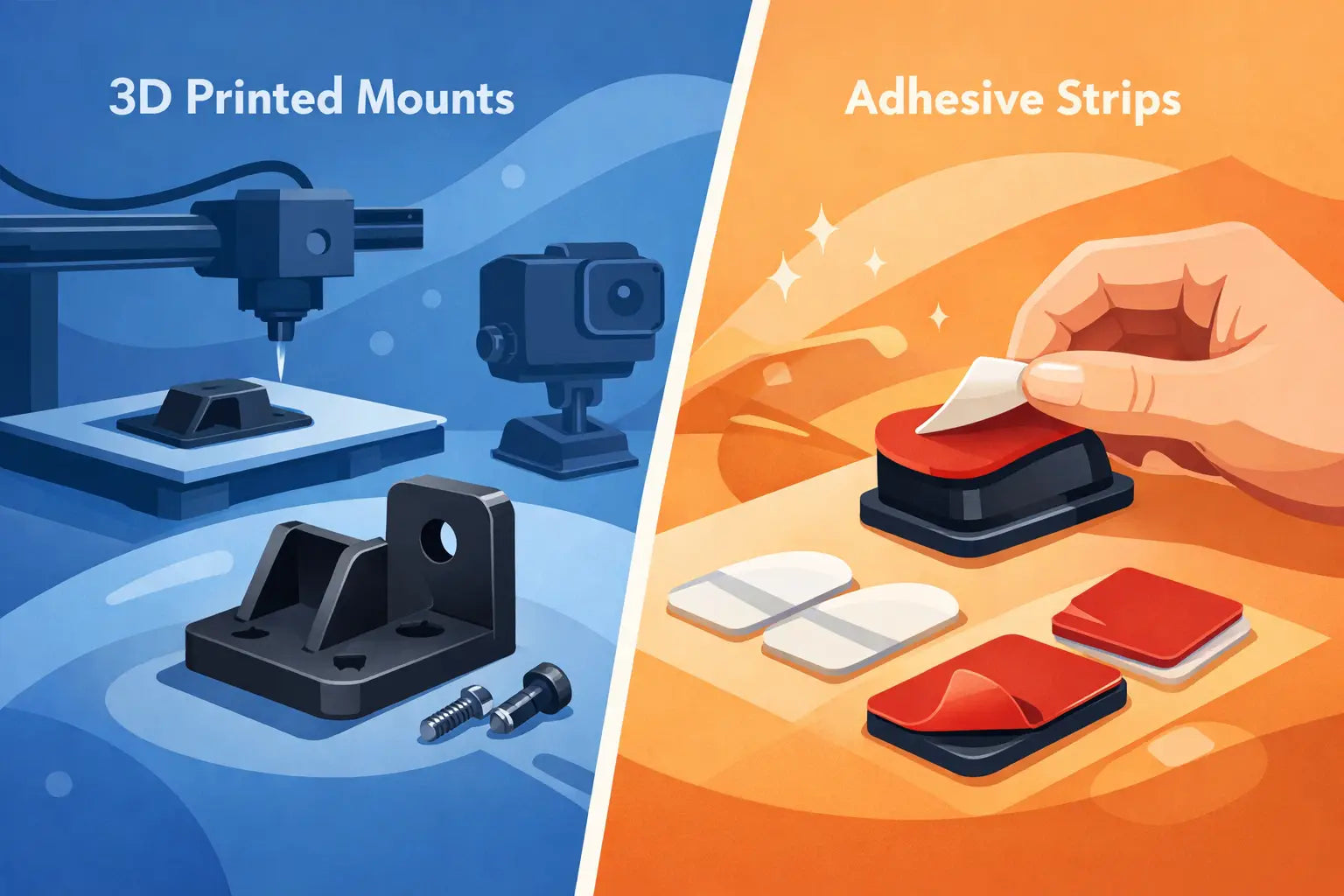
3D printed mounts vs adhesive strips for outdoor lights
The biggest difference comes down to control. Adhesive strips rely on surface prep, temperature, pressure, and time to bond well. If any of those conditions are off, performance drops fast. Dust, textured soffits, old paint, humidity, or cold-weather installation can all work against the adhesive before the lights ever turn on.
A 3D printed mount changes the equation. Instead of trusting a strip of adhesive to carry the whole job, the mount is designed around the shape of the light and the structure you are attaching it to. That gives you a more secure hold and, just as important, more consistent positioning. On a permanent outdoor install, that positioning matters. A slight shift in angle can change how the light washes across the house and make the whole run look uneven.
This is why homeowners who want a polished result tend to move away from tape-only installs. They want something that feels engineered, not improvised.
Where adhesive strips work well
Adhesive strips are popular for a reason. They are fast, cheap, and easy to understand. If you are testing a layout, decorating for a short season, or placing lights indoors on a smooth clean surface, they can be a practical option. You do not need extra hardware, and the install can move quickly.
They also appeal to anyone trying to avoid drilling. For renters or temporary applications, that matters. If the goal is flexibility more than permanence, adhesive has a place.
But outdoor permanent lighting pushes adhesive strips into their weakest conditions. Sun exposure can heat surfaces far beyond what they feel like from the ground. Cold snaps make some adhesives less forgiving. Moisture finds edges. Painted exterior surfaces age differently. Even when the strip holds, it may not hold evenly, which can lead to sagging sections, inconsistent spacing, or lights that slowly rotate out of alignment.
That does not mean every adhesive install fails. It means the margin for error is smaller than most homeowners expect.
Why 3D printed mounts solve the problems tape cannot
A good mount does more than hold a light in place. It creates repeatability. Every light sits where it should, at the angle it should, with spacing that stays consistent across the run. That becomes especially important on peaks and gables where crooked alignment is easy to spot from the street.
Purpose-built 3D printed mounts also help with installation speed in a different way. Adhesive may seem faster at first, but reworking fallen sections, replacing failed tape, and climbing back up to fix shifted lights costs time. A secure mount can reduce those callbacks on your own house.
Material choice matters too. Weather-resistant printed parts designed for outdoor use are built around the reality of sun, moisture, and temperature changes. When the mount is made specifically for the lighting system, fit improves. That means less wobble, less guesswork, and fewer compromises during installation.
For homeowners installing Govee permanent outdoor lights, that product-specific fit is usually the deciding factor. Generic tape does not know anything about lens direction, wire routing, soffit shape, or how the light should sit to create a clean architectural effect. A mount designed for that exact use case does.
Fit is not a small detail
This is where many installs either look custom or look patched together. Stock adhesive solutions are universal by design. That sounds convenient, but universal usually means it was not made for your exact light, your exact mounting surface, or your exact installation goal.
A 3D printed mount can account for the body shape of the light, the intended beam direction, and the practical realities of installing along roof edges and trim. That tighter fit helps the light stay centered and reduces movement over time. It also gives the finished install a cleaner appearance, which matters if you want the system to feel like part of the home and not an add-on.
Durability in real weather
Exterior lighting hardware lives a harder life than most people plan for. Summer heat bakes the mounting surface. Winter can make materials contract. Rain gets into edges and seams. Wind adds repeated movement. Even if the fixture itself is weather-ready, the mounting method still has to survive those cycles.
Adhesive strips can degrade gradually, which is part of the frustration. The failure is not always immediate. Sometimes it starts with one corner lifting, one light drooping, or one section slipping just enough to break the visual line. Then the repair becomes a piecemeal ladder job.
A properly designed mount gives you more confidence because the hold is mechanical and structured, not dependent on one adhesive layer doing all the work forever. That is a major advantage for anyone installing lights once and expecting them to stay put.
Aesthetics matter more than people think
Homeowners usually start this project for the lighting effect, but they stay happy with it because of the finished look during the day. A permanent outdoor system should not look messy when the lights are off.
Adhesive-only installs can create uneven spacing and inconsistent tilt. Over a long roofline, small errors add up. One light pointed too low or one section with sagging alignment is enough to make the whole run feel less finished.
Mounts help preserve a straight, intentional layout. That gives the home a cleaner daytime appearance and a more uniform nighttime result. If you invested in smart lighting for curb appeal, that detail is not extra. It is part of the result.
Cost now versus cost later
On the surface, adhesive strips usually win on initial cost. That is the simplest argument in their favor. If you are pricing parts only, tape looks economical.
But the better question is what you are paying for over the life of the install. If adhesive saves money upfront but requires reinstallation, replacement tape, extra prep, and multiple trips back up the ladder, the total cost changes. The same goes for a setup that never quite looks right and ends up being redone.
That is why 3d printed mounts vs adhesive strips is not really a question of cheap versus expensive. It is a question of temporary convenience versus long-term performance. For permanent outdoor lights, long-term performance usually wins.
Which option should you choose?
If your project is temporary, indoors, or on a very smooth surface where easy removal matters most, adhesive strips can make sense. They are simple and accessible, and for light-duty use, they can do the job.
If your project is a permanent outdoor installation and you care about clean alignment, weather resistance, and fewer future fixes, 3D printed mounts are the stronger choice. That is especially true for homeowners who want their Govee lighting to look professionally installed rather than taped into place.
PrintWorks 3D exists for exactly this kind of problem. When the stock mounting method falls short, a purpose-built mount gives you a better fit, a more secure install, and a result that looks like it belongs on the house.
The better question than 3D printed mounts vs adhesive strips
Instead of asking which option is easiest on install day, ask which one you want to trust six months from now. Outdoor lighting is one of those upgrades that should stop demanding attention once it is installed. If the goal is a clean, durable, permanent result, the mounting method deserves the same level of thought as the lights themselves.
Choose the option that keeps you off the ladder, keeps the lights aligned, and makes the finished install look as solid as the investment behind it.
Share:
Retrofit Mounts for Outdoor LED Lights
How to Replace Govee Light Mounts