
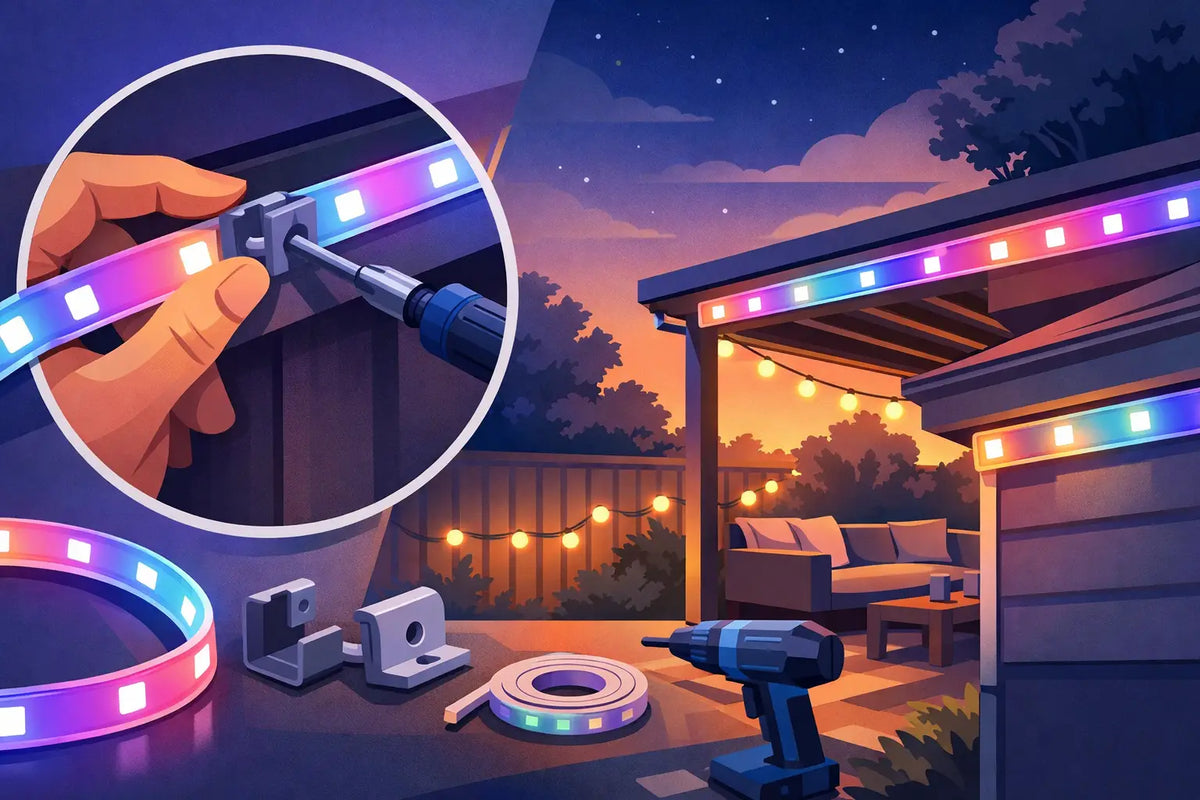
A box of permanent outdoor lights can make installation look simple: place a light, peel the adhesive, add a clip, and move to the next one. In practice, homeowners quickly ask, do Govee lights need custom brackets when the roofline has uneven soffits, deep fascia boards, tight gables, or surfaces that have seen a few seasons of heat and rain?
The honest answer is no, not every installation needs them. Factory mounting hardware can work well on a clean, flat, accessible surface with a straightforward layout. But if you want consistent light spacing, a cleaner finished look, and more confidence that the installation will stay put, purpose-built brackets can make a meaningful difference.
When Stock Govee Mounting Hardware Is Enough
Govee's included adhesive and clips are designed to get lights mounted without turning the project into a major construction job. For a short run under a level soffit, especially where the surface is smooth and easy to reach, that may be all you need.
Stock hardware is often a reasonable choice when the lights are installed on freshly painted or clean vinyl surfaces, the line is mostly straight, and you can position each light without working around trim, gutters, or architectural transitions. It is also a practical option for homeowners who expect to remove or relocate the lights soon.
That said, adhesive performance depends heavily on preparation and conditions. Dust, chalky paint, moisture, textured wood, cold temperatures, and repeated heat cycles can all reduce its holding strength. The included clips add security, but their placement may not always produce the exact fixture angle or spacing you want.
A temporary-looking installation is rarely the goal with permanent outdoor lights. If you are investing time on a ladder and running lighting around the front of your home, it makes sense to consider how the system will look after the first holiday season, the first summer storm, and several years of weather.
Why Custom Brackets Change the Installation
Custom brackets are not simply extra clips. They are mounting accessories designed around the shape, size, and intended position of a specific Govee light or component. The goal is to create a more controlled attachment point between the lighting system and your home.
For permanent outdoor light runs, a well-designed mount helps keep each fixture facing the same direction. That matters because small changes in angle can create visible differences in the light pattern on your siding, eaves, or roofline. One light that tilts outward or sits too close to the wall can stand out once the system turns on at night.
Brackets can also reduce reliance on adhesive alone. Mechanical support is particularly useful on surfaces that are painted, rough, aged, or exposed to significant weather. Rather than asking a small adhesive pad to carry the full burden over time, the mount gives the fixture a stable, repeatable home.
The visual benefit is just as valuable. Custom mounts can help keep lights evenly spaced along fascia, soffits, peaks, and gables while concealing the improvised look that sometimes comes with generic clips. For a home where the lighting will remain in place year-round, that cleaner alignment is a real upgrade.
Situations Where Custom Brackets Are Worth It
The more complex the installation, the more useful custom mounting becomes. You do not need brackets merely because the product exists. You need them when they solve a clear fit, durability, or appearance problem.
Custom brackets are especially helpful in these situations:
- Long, highly visible rooflines where inconsistent spacing or fixture angles will be easy to notice from the street.
- Peaks, gables, and corners where the mounting surface changes direction and standard clips do not offer ideal positioning.
- Textured, weathered, or questionable surfaces where adhesive may not be the long-term solution you want.
- Retrofit installations where lights are already installed but need better support, cleaner alignment, or a more secure finish.
- Controller and power supply placement where the included components need to be protected, organized, and kept off the ground.
Match the Bracket to Your Govee System
Not all Govee lights use the same housing, spacing, or mounting geometry. A mount made for a Govee Permanent Outdoor Lights Pro system may not fit a Non-Pro system, Prism lights, or a Light Curtain setup. Choosing by name alone is not enough. Confirm the exact product line before ordering accessories.
This is where product-specific design matters. A bracket that fits the light body correctly helps preserve the intended position without pinching wires, blocking light output, or forcing the fixture into an angle it was not designed to hold. The same rule applies to controller and power mounts. A secure holder should support the component while keeping cable routing practical and accessible.
PrintWorks 3D designs mounting accessories around these product-specific differences, including options for Pro, Non-Pro, Prism, Light Curtain, and controller setups. That specificity saves time compared with adapting a universal clip or trying to make a generic bracket fit with extra hardware.
Consider the Surface Before You Buy
The right bracket depends as much on your house as it does on your lights. Take a close look at the mounting area in daylight before deciding what you need. Measure the width and depth of the trim, check for gutters and downspouts, and identify places where the roofline changes height or direction.
Soffits are usually a popular mounting location because they keep fixtures tucked under the eaves. However, soffit material varies. Vinyl can flex, aluminum can be thin, and older wood may need more careful fastening. Fascia boards offer a more solid surface in many cases, but the mounting position may change the direction of the light effect.
Also think about access. A bracket that is easy to install from a stable ladder position is safer and more efficient than a mounting method that requires holding a light, pressing adhesive, managing a cable, and driving a screw all at once. The best accessory does not just hold the light securely. It makes the work more manageable.
Brackets Help, but Installation Prep Still Matters
Custom brackets improve the hardware side of the job, but they cannot compensate for poor planning. Lay out the system on the ground first and test every section before taking it to the roofline. Confirm where the power source, controller, extensions, and light runs will go.
Clean the mounting surface before installation, even if the brackets will be mechanically fastened. Dirt and debris can affect adhesive-backed components and make it harder to mark accurate placement. If you are combining brackets with adhesive, install only on a dry surface and follow the lighting manufacturer's temperature and cure-time guidance.
Keep wire routing intentional. Avoid pulling cables tight around corners, pinching them behind trim, or leaving excess wire hanging where it can catch wind. A clean cable path improves the finished appearance and makes future service easier if a section ever needs attention.
The Trade-Off: More Upfront Work, Less Rework Later
Custom brackets add cost and a little planning to the project. For a small, hidden run on a smooth surface, that extra effort may not be necessary. There is no benefit in overbuilding an installation that the standard hardware can handle well.
For a full front elevation, difficult roofline, or installation you want to trust through changing seasons, the trade-off often favors custom mounts. Spending a little more time on alignment and support at the beginning can prevent sagging, crooked fixtures, failed adhesive, and repeat trips up the ladder later.
The question is not whether every Govee light must have a custom bracket. The better question is whether your home, layout, and expectations call for a more permanent mounting method. If the answer is yes, choose brackets made for your exact system, plan the run before drilling, and give every light a secure place to stay.
Share:
Top Accessories for Govee Rooflines That Last
8 Govee Controller Mount Ideas That Stay Put