

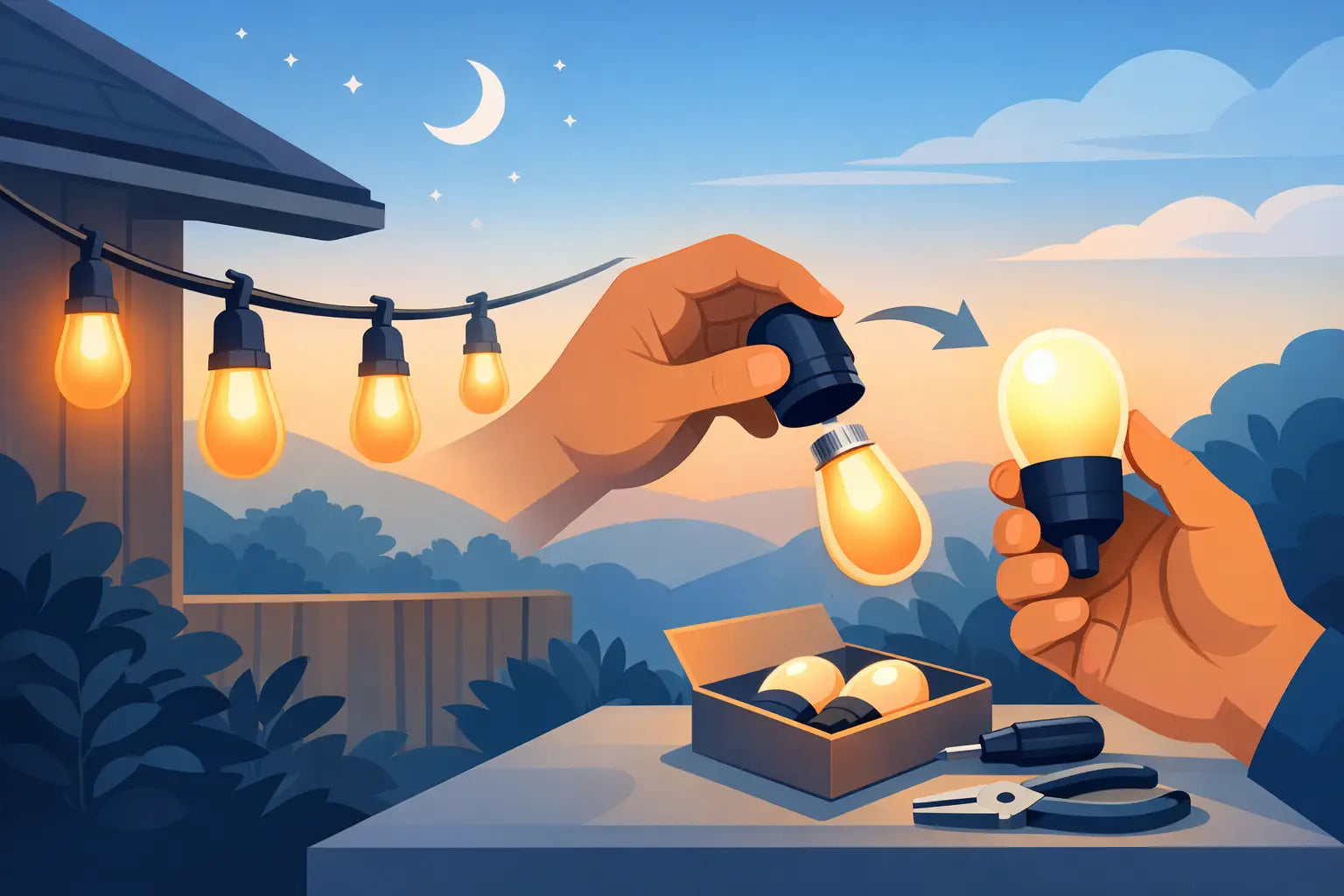
If one section of your roofline suddenly goes dark, the first question is usually simple: can Govee outdoor lights be replaced, or are you stuck redoing the whole run? The good news is that replacement is often possible. The less-fun part is that the answer depends on which Govee product you have, what exactly failed, and how the lights were installed in the first place.
That distinction matters more than most homeowners expect. A bad light node, a damaged wire, a failed power supply, or a controller issue can all look like the same problem from the ground. If you want a clean permanent installation, the goal is not just getting the lights back on. It is fixing the right component without creating a loose, misaligned, or weather-vulnerable section afterward.
Can Govee outdoor lights be replaced on every model?
In many cases, yes, Govee outdoor lights can be replaced, but not always as simply as swapping one bulb like an old porch fixture. Most Govee outdoor systems use integrated LED modules connected in sections. That means you are usually dealing with a strand or segment-based system, not a standard screw-in bulb setup.
For some products, replacing a damaged section is realistic if you have a compatible replacement part and the issue is isolated. For others, especially if the failure point is hard to separate or the wiring is sealed in a way that limits repair, replacing the full section or even the entire set may be the cleaner option. This is especially true when the system has already been exposed to heat, moisture, and seasonal expansion on the exterior of the home.
The practical answer is this: replacement is possible, but the level of replacement matters. You might replace a single light module, one strand section, the power supply, the controller, or the entire kit depending on the fault.
What usually needs replacing
When homeowners say a Govee light needs replacement, they are often talking about one of four different failures.
The first is a dead light or small cluster of lights in an otherwise working run. That can point to a failed module or a damaged connection in that section. The second is an entire segment not powering on, which may indicate a bad extension, connector, or section of cable. The third is inconsistent behavior like flickering, wrong colors, or intermittent operation, which can come from voltage drop, water intrusion, or controller issues. The fourth is total failure, where nothing turns on at all and the problem may be the power adapter or control box rather than the lights themselves.
This is why troubleshooting before replacing parts saves time. If you replace a strand when the real issue is the power supply, you have spent more money and still have the same problem.
Signs the light itself is the problem
If one light stays dark while the rest of the run works normally, the module itself may be bad. The same goes for a light that shows the wrong color every time while the neighboring lights respond correctly. In those cases, the failure is often local.
Still, local does not always mean easy. On permanent outdoor systems, getting to that one failed point often means removing a secured section from the soffit, fascia, or trim. If the original install used weak adhesive or poorly fitted clips, removal can turn into a bigger repair than expected.
Signs it may be something else
If the failure happens after heavy rain, a cold snap, or strong sun exposure, think bigger than the light itself. Outdoor electronics fail at connectors and stress points just as often as they fail at the LED. If a whole section goes out at once, inspect the nearest connection point before assuming every light in that section is bad.
A clean diagnosis matters because outdoor lighting should look intentional. A rushed repair that leaves one section sagging or pointed off-angle will stand out every night.
How replacement works in real life
If you have a compatible replacement segment, the process is usually straightforward in theory. You power the system down, remove the affected section, connect the replacement, test it, and reinstall it securely. In practice, the reinstall step is where many permanent-light setups fall short.
Factory mounting methods are often good enough for a temporary test fit, not always for years of heat, cold, moisture, and wind. Once you remove a section, the original adhesive backing or stock clip arrangement may not go back with the same hold or alignment. That is why replacement is not only an electrical question. It is also an installation quality question.
If the section has to come down, you want it to go back up in the exact position, with the same spacing and beam direction, and with enough support to stay there. That is especially important on peaks, gables, and long rooflines where even slight inconsistency becomes visible.
When replacing one section makes sense
A section-level replacement usually makes sense when the rest of the system is in good shape, the failed area is clearly isolated, and you can get the correct replacement component. This is often the most cost-effective route if your power supply, controller, and remaining light runs are all working as expected.
It also makes sense when your installation was done in a way that supports clean removal and reattachment. A secure mount system can turn a frustrating ladder job into a manageable repair. That is one reason many homeowners upgrade mounting hardware even after the initial install. They want the setup to be serviceable, not just attached.
If your lights are only loosely secured, or if the original hardware has already started to shift, a repair is a good moment to improve the mounting approach rather than putting the same weak point back in place.
When full replacement is the smarter call
Sometimes replacing part of the system is technically possible but still not the best move. If your lights have multiple failing sections, widespread weather wear, brittle wiring, or recurring connectivity problems, piecemeal repairs can become a cycle. You fix one spot and another one fails a month later.
A full replacement may also be worth considering if you are unhappy with the original layout, spacing, or attachment method. If the lights never sat quite right under the soffit or the stock install always looked slightly uneven, starting fresh can save repeated ladder time.
This is where a lot of homeowners shift from “Can I patch it?” to “How do I make this setup actually permanent?” That is a smart move. Outdoor smart lighting is an exterior upgrade, not just seasonal decor. It should stay aligned, stay secure, and look clean from the curb.
What to check before you replace Govee outdoor lights
Before ordering anything, confirm the exact model you have and identify whether the issue is with the light section, power supply, controller, or connector. Product families can look similar while using different layouts or components. Guessing here is how homeowners end up with parts that do not match.
Next, inspect how the failed section is mounted. If removal is likely to damage the current attachment points, plan for how you will remount it before you climb the ladder. This is the part many people skip, and it is usually where the frustration starts.
Also pay attention to the environment around the failure. If the issue happened near a corner, peak, splice point, or extension, mechanical stress may have contributed. Replacing the light without addressing the strain on that area can lead to the same failure again.
Why mounting matters after replacement
A replaced section that works electrically but sits crooked is still a bad result. Permanent outdoor lights depend on consistent angle, spacing, and hold. Once one area shifts, the whole roofline can look uneven.
That is why mounting hardware matters so much during replacement and retrofit work. Purpose-built mounts help keep each light positioned correctly and supported against weather and movement. For homeowners who want a cleaner reinstall, this is often the difference between a patch job and a finished look.
PrintWorks 3D focuses on that exact problem with mounting solutions designed around specific Govee light systems, especially for permanent outdoor installations where durability and alignment matter.
The honest answer to can Govee outdoor lights be replaced
Yes, Govee outdoor lights can often be replaced, but the real question is how much of the system should be replaced and how cleanly you can put it back. If the failure is isolated and the rest of the setup is solid, a section replacement can be the right fix. If the system has broader wear or the install was never secure to begin with, replacing more of it may save time and frustration.
The best repair is not just the one that gets the lights back on tonight. It is the one that still looks right and stays put when the weather turns.
Share:
How Long Do Permanent Outdoor Lights Last?
How to Fix Sagging Outdoor Lights