

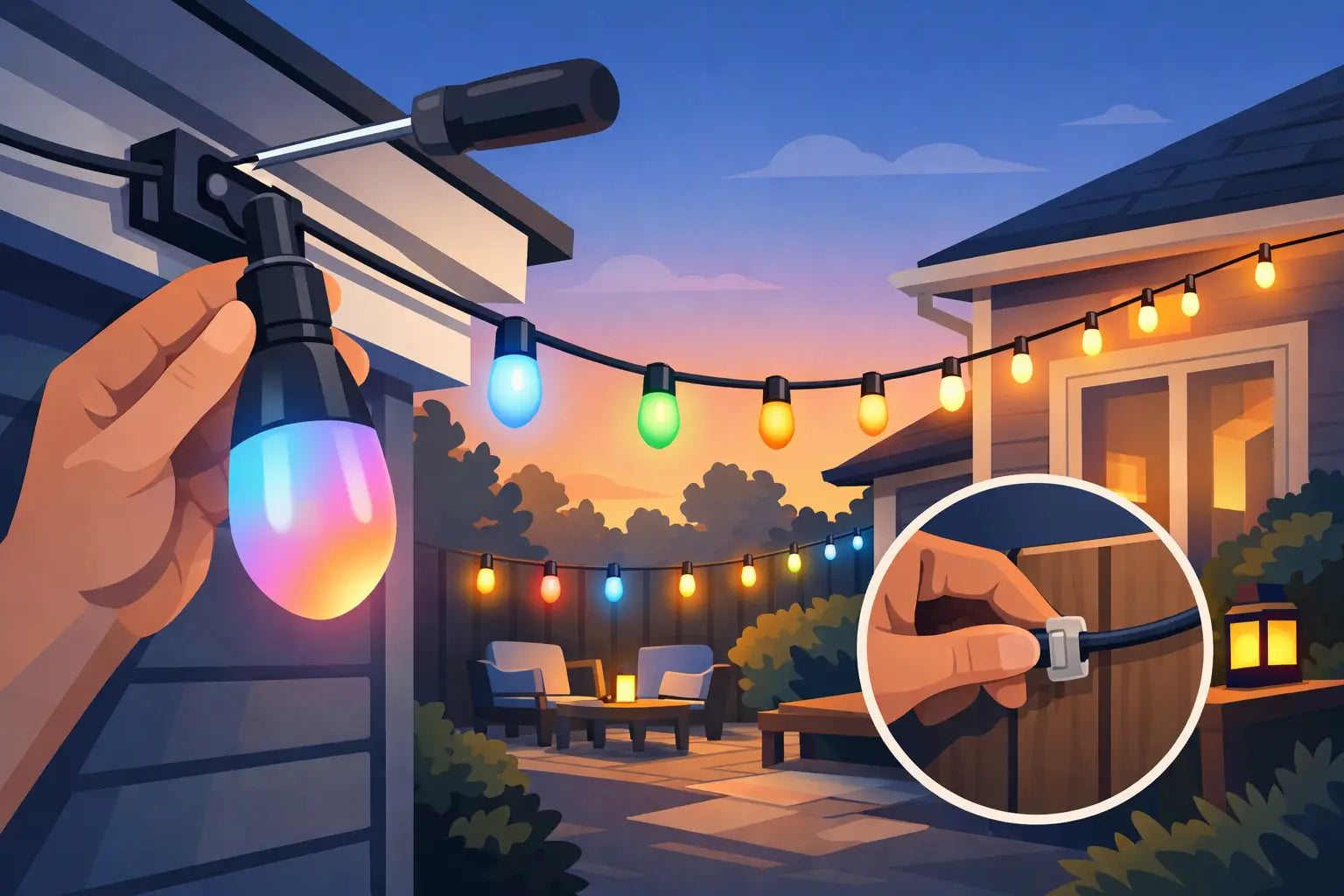
The difference between a clean roofline install and a frustrating weekend usually comes down to mounting. If you're figuring out how to mount Govee outdoor lights, the lights themselves are only part of the job. The real challenge is getting consistent spacing, secure attachment, and an angle that actually makes the effect look right from the street.
A lot of homeowners find that out after opening the box. The included mounting method may work in some situations, but soffits, fascia boards, peaks, gables, and trim details rarely give you a perfect surface. Add heat, cold, dust, moisture, and ladder time, and a quick install can turn into a redo. If you want the setup to look permanent, the mounting method matters just as much as the lights.
How to mount Govee outdoor lights for a permanent look
The best installs start before the first light goes up. You want to know exactly where the lights will sit, what surface you're attaching to, and how the beam will wash the house. Permanent outdoor lights look best when they follow the structure cleanly and stay visually consistent around corners, peaks, and long runs.
For most homes, that means mounting under the soffit or along a stable trim line where each light can stay evenly positioned. If the spacing wanders or the lights tilt at different angles, the finished effect looks uneven at night even if everything is technically working. This is why a purpose-built mount makes such a difference. It holds each light where it belongs instead of asking tape alone to do all the work.
You should also think about serviceability. A mount that lets you place, align, and secure each puck with less fuss is easier to install the first time and easier to adjust later if needed. That matters when you're on a ladder trying to keep a long run straight.
Start with the surface, not the lights
Before you mount anything, inspect the surface. Painted wood, aluminum soffits, vinyl, brick trim transitions, and textured exterior materials all behave differently. A smooth, clean, dry surface gives you the best shot at a stable install. If the area is chalky, dirty, damp, or flaking, adhesion drops fast.
Clean the section first and let it dry fully. If you're working under eaves, check for dust buildup, spider webs, and old residue. If you're installing on a sun-exposed side of the house, remember that heat cycles can weaken a marginal install over time. What feels secure during setup may not stay that way after a season of expansion, contraction, and weather exposure.
This is also the point where you should identify problem areas. Corners, outlet locations, controller placement, and transitions between rooflines need a plan. If you wait until the strand is hanging in the air, you'll end up making rushed decisions.
Measure the run and dry-fit the layout
Measure the full path before you peel backing or fasten anything. Mark your start point, note where each section changes direction, and decide where the controller and power supply will live. Govee systems perform better when the layout is intentional, and your install looks better when the lights stay centered and evenly presented across the structure.
A dry fit helps you catch issues early. Hold a few lights in place and step back. Check how far they sit from the wall, where the wash lands, and whether the line follows the house naturally. Small position changes can noticeably change the nighttime effect.
The biggest mounting mistake homeowners make
The most common mistake is trusting a one-size-fits-all attachment method on a not-at-all standard house. Outdoor lighting runs across real architecture, not a perfect flat test panel. Some sections are level, some are angled, some are narrow, and some need a tighter hold because of wind or surface texture.
That is where stock mounting options often come up short. They may be fine for a basic application, but they are not always built around long-term alignment, difficult roofline geometry, or the goal of making the install look truly built-in. Homeowners usually notice the issue in one of three ways: lights begin to sag, individual pucks rotate out of position, or the final beam pattern looks inconsistent because the lights are not held at the same angle.
A better mount solves those problems at the source. Product-specific mounts built for Govee lights give each puck a defined seat and more predictable position. That means less guesswork, cleaner lines, and a setup that holds up better in real outdoor conditions.
Choosing the right mount for your Govee setup
Not every Govee light kit mounts the same way, and not every part of the house needs the same hardware. The right choice depends on whether you have Pro or Non-Pro lights, whether you're installing along straight runs or prism-style architectural sections, and whether you need dedicated mounting for controllers or power components.
For straightforward permanent light runs, a mount designed specifically for your model gives you the cleanest result. If your home has peaks, gables, or more visible angles, a specialized option can help maintain alignment where generic solutions tend to drift visually. If you're working with Govee curtain lights, that is its own mounting scenario entirely, and dedicated hardware usually saves a lot of frustration.
This is where a specialist brand earns its keep. PrintWorks 3D focuses on mounts engineered around actual Govee product dimensions and real installation conditions, including Pro mounts, Non-Pro mounts, Prism mounts, Light Curtain mounts, and controller and power mounts. That kind of specificity matters when you want a secure fit instead of a workaround.
How to install the lights without fighting the process
Once your layout is planned and your mounting hardware matches the application, installation gets much more predictable. Work in small sections instead of trying to manage the whole strand at once. Place a few mounts, confirm alignment, then continue. That pacing keeps the run straight and reduces rework.
Keep tension under control. You do not want the cable pulling against the lights or twisting them out of position. Leave enough slack for natural routing, but not so much that loops or dips become visible. A clean install usually hides the management work.
Consistency matters more than speed. If one section sits slightly farther out or turns slightly inward, it will show at night. Stand back regularly and check the line from the driveway or street. That perspective tells you more than the ladder view ever will.
Corners, peaks, and tricky transitions
These sections separate average installs from polished ones. Corners need a deliberate turn, not a forced bend that shifts spacing. Peaks and gables need mounts that keep the line symmetrical. Controller and power locations need to be accessible without becoming visually distracting.
If you are retrofitting an existing install, this is also where upgraded mounts help most. You do not necessarily have to start from scratch. In many cases, the fix is replacing weak attachment points with hardware that better supports the lights and keeps the angle consistent.
Weather resistance is not optional
Outdoor lighting hardware has to deal with heat, cold, moisture, and seasonal movement. That is why mount material and fit matter. A mount that looks fine on day one but gets brittle, loosens, or shifts after weather exposure is not really solving the problem.
You want hardware designed for exterior use and built for durability, not just convenience. Weather-resistant materials, a secure hold, and a shape that supports the fixture properly all contribute to a longer-lasting install. The goal is simple: fewer callbacks to your own ladder.
There is also a trade-off worth mentioning. The fastest mounting method is not always the best long-term method. If your priority is a polished, permanent look, it usually makes sense to spend more time upfront on fit and alignment rather than saving an hour now and correcting failures later.
When to upgrade your mounting setup
If your lights are drooping, rotating, unevenly spaced, or partially detached, your current mounting approach is already telling you it is not enough. The same goes for installs where the beam pattern looks messy because the lights are not held uniformly against the house.
An upgrade also makes sense if you are installing a premium lighting system and want the finished result to match the investment. Govee lights can look excellent, but only when the hardware holding them up is doing its job. Better mounts improve appearance, stability, and confidence every time the weather changes.
If you are still in the planning phase, that is even better. It is much easier to build a clean install from the start than to correct one after a season of movement and adhesive fatigue.
A good outdoor lighting install should feel finished, not temporary. Mount the lights like they are meant to stay there, and the rest of the setup gets a whole lot easier.
Share:
Permanent Outdoor LED Light Installation Tips
Best Mounts for Govee Lights