

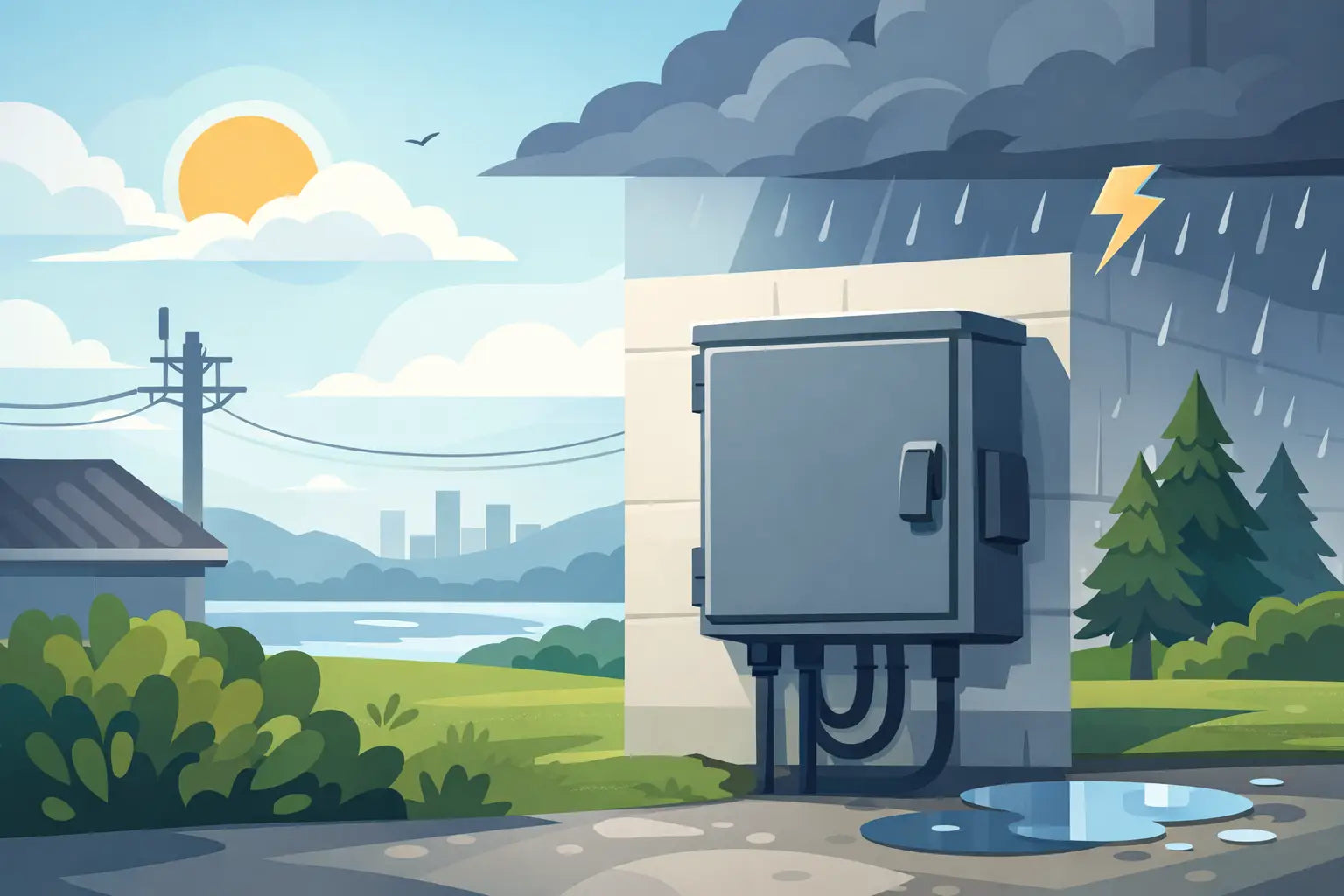
That question usually comes up halfway up a ladder, with the lights mapped out, the power location chosen, and one stubborn piece left to figure out: can controller boxes stay outdoors? The honest answer is yes, sometimes. But it depends on the controller, the enclosure, the mounting method, and how much weather your house really sees.
A lot of homeowners assume that if a lighting system is sold for exterior use, every component in the box is ready for full-time exposure. That is not always true. LEDs may be rated for outdoor installation while the controller or power components still need protection from direct rain, standing water, harsh sun, or freeze-thaw cycles. If you want a setup that looks clean and lasts, the controller box deserves just as much planning as the lights themselves.
Can controller boxes stay outdoors if they are weather resistant?
Weather resistant and weatherproof are not the same thing, and that difference matters. A weather-resistant controller box may tolerate humidity, splashes, and normal outdoor conditions when mounted correctly. That does not mean it should sit exposed on a flat surface where water can pool around cable entries or collect underneath the housing.
Most failures happen at the weak points, not the box itself. Cable connections, loose covers, poorly sealed knockouts, and unsupported wiring are common trouble spots. Even a decent outdoor-rated enclosure can become a problem if it is mounted upside down, installed under roof runoff, or left hanging by the wires.
For permanent smart lighting, the safer mindset is this: outdoor use does not mean careless exposure. It means controlled exposure. The more you can shield the controller from direct water, baking sun, and physical strain, the better your long-term result will be.
What determines whether controller boxes can stay outdoors?
The first factor is the manufacturer rating. If the controller or enclosure is specifically rated for outdoor use, that gives you a starting point. If it is rated for indoor use only, the answer is simple - do not leave it outdoors unless it is placed inside a properly rated protective enclosure.
The second factor is placement. A controller mounted under an eave, tucked away from driving rain, is in a very different situation than one mounted on an exposed wall with no cover. Both are technically outside, but they are not dealing with the same environment. Regional weather matters too. A mild, dry climate is easier on electronics than a home that sees heavy rain, snow, salt air, and wide temperature swings.
The third factor is mounting support. A controller box needs to stay stable. Movement stresses wires, loosens cable entries, and eventually opens paths for moisture. This is one of the most overlooked parts of an outdoor install. A solid mount keeps the box positioned correctly, reduces strain on the housing, and helps maintain a cleaner, more permanent appearance.
The biggest risks of leaving a controller box outdoors
Water intrusion is the obvious one, but it is not the only problem. Condensation can build up inside enclosures even when rain never gets in directly. Warm daytime temperatures followed by cold nights can create moisture inside the box, especially if ventilation and sealing are poorly balanced.
UV exposure is another long-term issue. Sunlight breaks down plastics, fades surfaces, and can make lower-grade materials brittle over time. A controller box that looks fine in month three may crack, warp, or lose seal integrity later if it lives in direct sun all year.
Heat also matters. Electronics do not love being trapped in a hot enclosure mounted against siding in afternoon sun. Add limited airflow and you can shorten the life of the controller even if no water ever touches it.
Then there is the mechanical side. If the box is unsupported, attached with weak adhesive, or mounted in a way that lets wires pull against it, weather becomes only part of the problem. Wind, vibration, and cable tension can create gradual failures that look random but are really installation-related.
Where outdoor controller boxes should be mounted
If you are installing permanent outdoor lighting, the best location is usually sheltered, elevated, and accessible. Under soffits, beneath eaves, inside covered exterior utility zones, or within a protective mounting area all make more sense than fully exposed surfaces.
Try to avoid low spots where water can splash up or drain across the wall. Keep the box off horizontal surfaces where water can collect. If the controller has cable exits, orient them so gravity helps you instead of working against you. Drip loops in the wiring can help keep water from running straight into connection points.
Accessibility matters too. A controller hidden too well becomes a pain when you need to reset the system, troubleshoot power, or reconnect after updates. There is a balance between protection and serviceability. You want it shielded, but not buried behind trim or mounted where only a full ladder setup can reach it.
Can controller boxes stay outdoors without an enclosure?
Sometimes yes, but only if the box itself is designed for that role and installed in the right conditions. If the controller housing is not clearly intended for direct outdoor exposure, adding an enclosure is the safer call. That extra layer protects the electronics, improves the look of the install, and gives you more control over mounting and cable management.
A protective enclosure also helps when the factory controller shape is awkward. Many stock components are functional but not designed with clean exterior mounting in mind. They can feel like an afterthought on an otherwise polished lighting job. A proper mount or housing keeps everything more secure and less visible, which matters when your goal is a permanent finished look.
For homeowners installing Govee lighting, this is usually where purpose-built accessories make the biggest difference. The lights may be the star of the system, but the controller and power setup often determine whether the installation feels temporary or truly dialed in.
Signs your controller box is not safe outdoors
If the cover does not close tightly, if cable entries are loose, or if the unit shifts when touched, it is not ready for long-term outdoor exposure. The same goes for discoloration, cracking plastic, visible rust on hardware, or repeated connection issues after rain.
Watch for nuisance problems too. Intermittent power loss, app connectivity hiccups after weather changes, or lights acting erratically can all point back to moisture, heat, or stressed wiring at the controller. These symptoms get blamed on the lighting system itself all the time, when the real issue is how the control hardware was mounted.
A clean install should feel stable and intentional. If the controller is dangling, tucked behind a loose cover, or patched into place with improvised fasteners, it is worth fixing before it becomes a bigger problem.
Best practices if controller boxes stay outdoors year-round
Start with the rating and do not guess. If the controller is not clearly suitable for outdoor conditions, protect it with an enclosure that is. Mount it under cover whenever possible, and use hardware that will hold up through changing weather.
Support the box independently rather than letting cables carry the load. Keep wire paths neat, avoid tight bends, and leave drip loops where needed. Seal only where appropriate. Over-sealing without considering heat and condensation can create its own issues, so the goal is not to trap everything airtight without a plan.
Material choice matters more than many people expect. Outdoor accessories made from weather-resistant materials hold alignment better, resist UV damage longer, and reduce the chance of sagging or cracking over time. That is one reason specialized mounting solutions exist in the first place. At PrintWorks 3D, that problem-solving mindset is the whole point - giving homeowners a cleaner, stronger way to mount outdoor lighting components where stock hardware falls short.
If your setup includes a controller, power supply, and extension connections, treat the whole assembly as one weather-exposed system. Protecting just the box while leaving connectors exposed nearby only solves part of the issue.
So, can controller boxes stay outdoors?
Yes, many can, but not all of them should. The real answer comes down to rating, location, enclosure quality, and how well the box is mounted and protected. Outdoor installs reward the extra effort upfront. A controller placed thoughtfully and mounted securely is far less likely to fail, shift, or become the weak link in an otherwise great lighting setup.
If you are already investing in permanent exterior lights, it makes sense to give the controller the same level of attention as the roofline layout and mount spacing. A little planning here saves a lot of ladder time later.
Share:
Best Mounts for Angled Rooflines
How to Install Govee Peak Lights Right